


James Hardie Siding Contractors in Grass Valley, CA
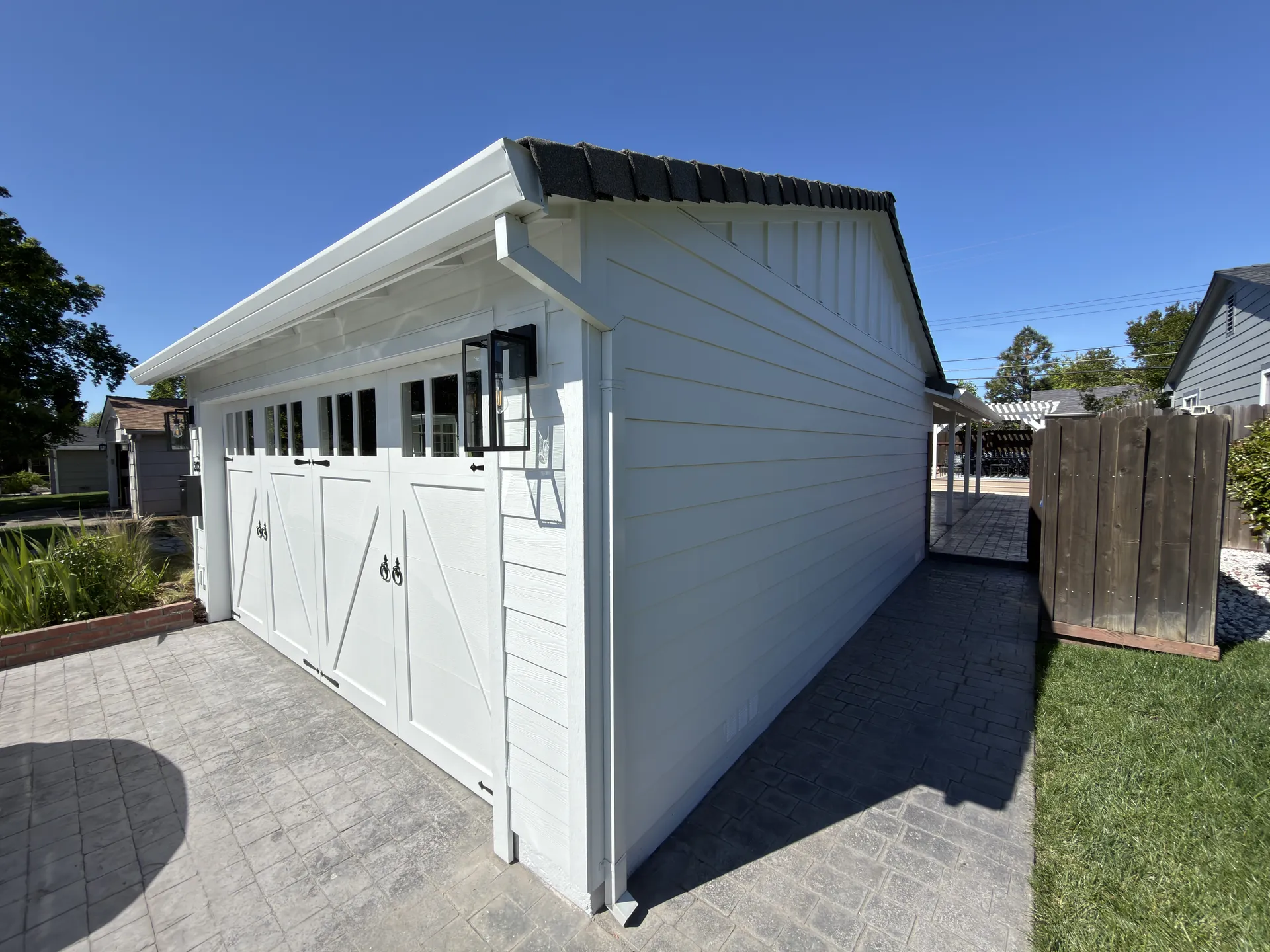
We install certified James Hardie fiber cement siding on Grass Valley homes, from historic cottages near downtown to wooded foothill properties along Highway 49. We’re a family-owned, James Hardie Alliance Select Contractor, and we’ve already completed a full house James Hardie plank siding project right here in Grass Valley CA, in Mountain Sage with Cobble Stone trim over new OSB sheathing. If you’re comparing siding contractors near me and want certified work backed by real accountability, that’s who to hire: specialists who do James Hardie siding and Anlin windows, licensed, bonded, and insured under California license #1092104.
Fiber cement is non-combustible with a Class A fire rating, which matters in a community with real wildfire exposure and mapped WUI zones. A proper exterior install includes house wrap, flashing, and panels, not just cladding slapped on a wall.
Get Your Free Estimate Today, call (916) 699-7070. Learn more about our siding work.
Our James Hardie Siding Services in Grass Valley
We install James Hardie fiber cement siding and Anlin windows and doors, two disciplines we’ve chosen to master rather than spread thin across a dozen trades. A complete siding installation is a system: house wrap, flashing, panels, trim, and soffit working together. Proper installation prevents moisture damage behind the panels, and proper weather-resistive barriers prevent the dry rot and mold that older homes in Grass Valley are prone to. We flash around windows and doors specifically to keep water out at the openings where it’s most likely to get in. These materials are engineered to work as a unit, which is why your siding project should be handled by contractors who install the full assembly rather than just hang board. With us, one accountable team handles everything under one roof, so there’s no finger-pointing between trades.
Most Grass Valley jobs to re side are full tear-offs, which let us inspect what’s behind the old cladding. Overlay installation is valid only on sound, flat, dry walls, and much of the local housing stock is old enough that we recommend seeing the sheathing first. When we compare materials for you, we’re straight about the differences. Vinyl siding does not provide the fire resistance that fiber cement does, and vinyl can warp or soften near a wildfire’s heat long before it ignites. Fiber cement resists rot and insect damage and carries authentic wood-grain textures, so it reads like real wood on a Craftsman or Victorian elevation without the maintenance of wood. See our full siding service page.
Full-House James Hardie Fiber Cement Siding Installation
A complete re side starts with tear off, then a sheathing assessment to catch concealed damage. From there we install a weather-resistive barrier, flashing at every penetration, ColorPlus® Technology panels, Hardie trim, and soffit, finishing with the City’s final inspection. ColorPlus® Technology arrives factory-finished, which reduces the site painting and ongoing maintenance many older homes would otherwise need. Each component is installed to James Hardie’s published specifications, which is what keeps the manufacturer warranties intact. Your new siding is backed by a written guarantee, not a verbal one.
Fiber Cement vs. LP SmartSide vs. Vinyl: What Fits Grass Valley CA and Penn Valley
For the Sierra foothills, fiber cement is the siding we recommend, and here’s the why. It’s non-combustible with a Class A fire rating, it withstands freeze-thaw cycles without cracking through Grass Valley’s frosty winters, and it handles moisture better than vinyl siding through the wet season. Engineered wood, such as LP SmartSide, is a legitimate option and some contractors recommend it for local climates, but we install James Hardie fiber cement because of its fire performance and moisture resistance. LP SmartSide is wood-based, which behaves differently than fiber cement in a WUI setting, where a non-combustible exterior carries real weight. Vinyl siding can last 20 to 40 years when it’s properly installed, yet it doesn’t match fiber cement for fire resistance or long-term moisture performance across this terrain, whether the home sits in Grass Valley, Penn Valley, or Alta Sierra. When you weigh the materials side by side, the long-term math favors fiber cement.
Anlin Window & Door Replacement
We also install Anlin windows and doors, California-engineered with Low-E3 glass for energy savings and a lifetime warranty with accidental breakage coverage. We integrate flashing at every opening so the windows tie into the siding system cleanly. Windows are our second discipline, secondary to siding, but every window is installed to the same standard.
Why Grass Valley Homeowners Choose Us
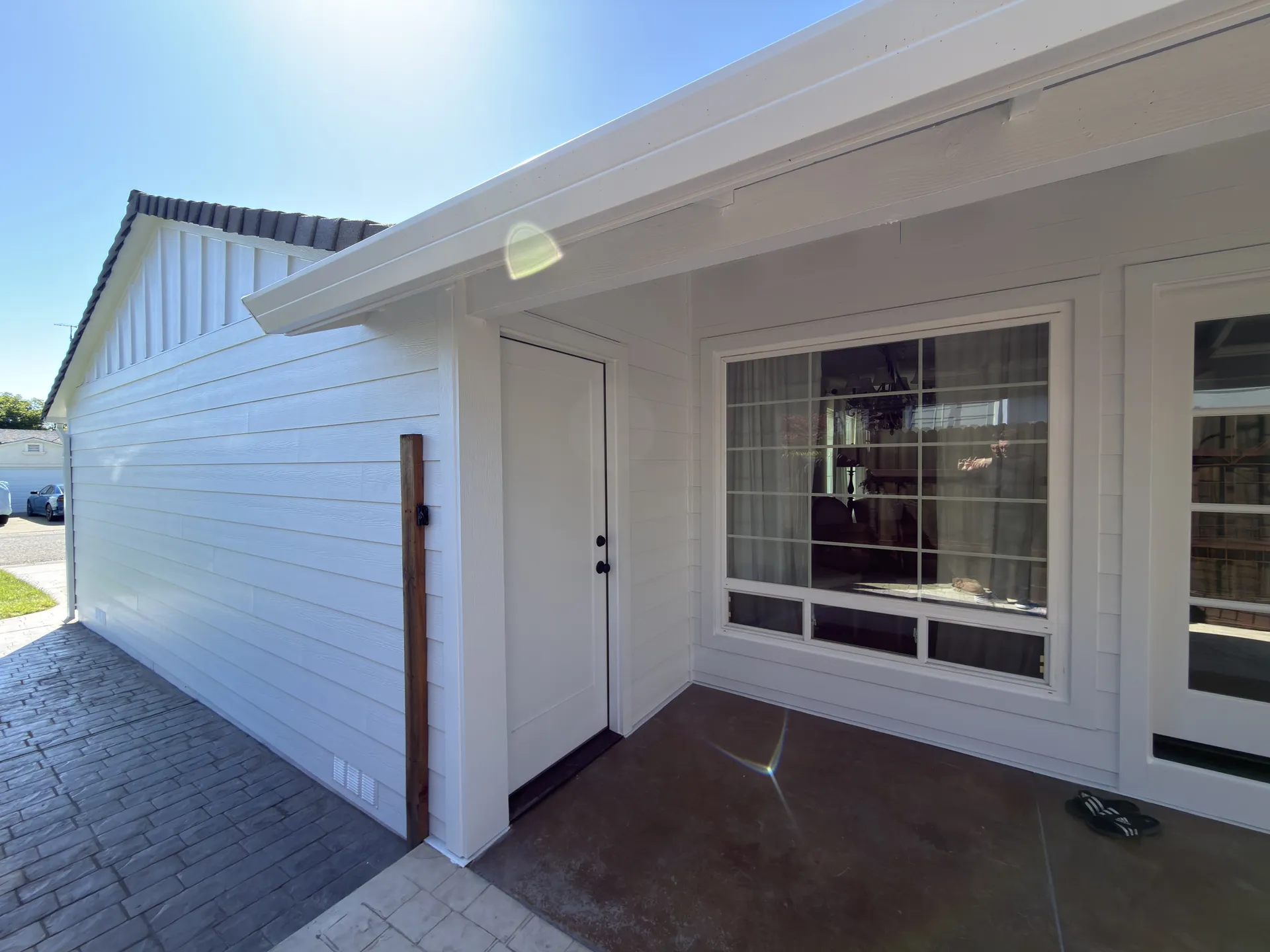
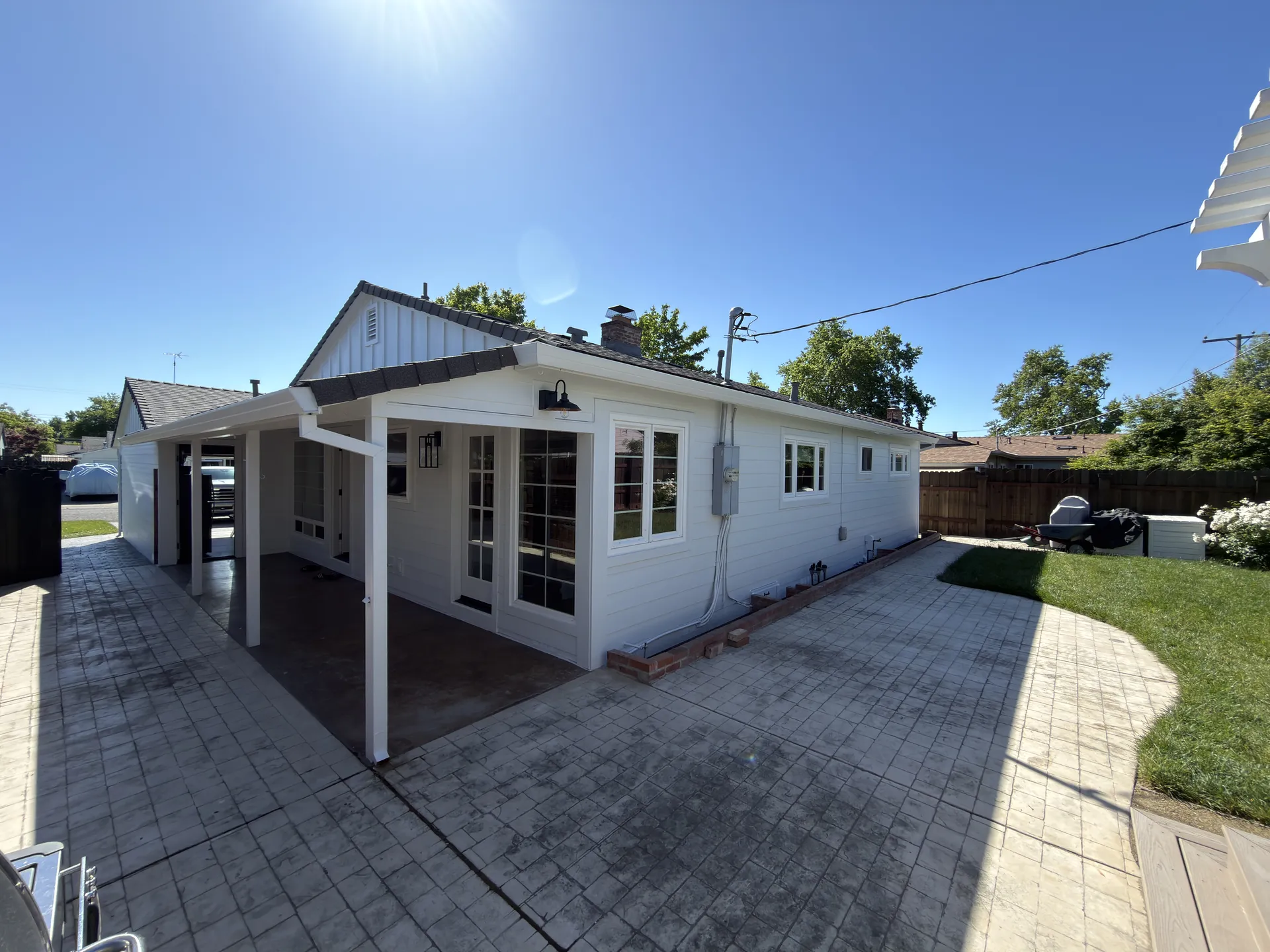
We’re certified, specialized, family-owned, and already proven in Grass Valley. The clearest proof is our finished local project: James Hardie plank siding in Mountain Sage with Cobble Stone trim, installed over new OSB sheathing, documented in our project gallery. That’s a job completed here, not just elsewhere in the Sacramento region.
Behind that work sits our James Hardie Alliance Select Contractor status, license #1092104 (licensed, bonded, and insured), a 15-year workmanship warranty, and a 30-year James Hardie material warranty available on qualifying installs. That warranty coverage comes straight from the manufacturers, not a verbal promise from a crew. Gary Chernyetsky, our owner and founder, leads project oversight personally as your dedicated project manager and does a final detail check on the crew’s work. When something isn’t right, he has it redone.
We also address the things that make homeowners nervous. We don’t demand large upfront cash deposits. We carry general liability and workers’ compensation coverage and can show proof. We hold a City of Grass Valley Business License for the permits we pull. And we’ll show you photos of completed siding installations before you commit. Fiber cement siding recoups about 114% at resale, so this is money that works for you later.
See the finished Grass Valley project, then Get Your Free Estimate, (916) 699-7070. Financing is available; ask us during your estimate.
How Your Grass Valley Siding Project Works, Start to Fixed Price
Four clear steps take you from first call to finished exterior, with a fixed price in writing before any work begins.
- Free estimate and written scope. We measure, assess your walls, and give you an itemized written estimate that spells out tear off and moisture-barrier removal as line items, because installation method affects the cost significantly. Your price depends on your actual walls, and you get a fixed figure, not a moving target.
- Permit and inspection coordination. We file the City of Grass Valley re-siding permit and schedule the pre-alteration and final inspections.
- Tear off, sheathing check, and system install. After ordering materials to your approved scope, we remove the old cladding, inspect the sheathing, then install barrier, flashing, panels, trim, and soffit.
- Final walkthrough and punch list. We walk the home with you, work any punch list items, and Gary runs his detail check before we call the job done.
About concealed damage: older walls can hide rot or failed sheathing that nobody can see until the siding comes off. We don’t bury that. When we find it, we show you, explain it, and handle those repairs through a written change order so there are no surprises on the invoice.
Grass Valley and Alta Sierra Homes, Historic Districts, Climate and Permits We Know Firsthand
Grass Valley’s housing is old, hilly, and often historically significant, and the siding scope follows from that. In the City’s 2016 data, 84% of homes were at least 38 years old, with a median construction year of 1973, so concealed repairs are common. The West Residential District runs heavily to homes from 1855 to 1930, with steep lots, basements, retaining walls, and narrow streets that complicate staging. The South Residential District leans toward 1880s-to-1940s one-story rectangular and L-shaped homes where trim and profile matching matter. Conaway Street carries late-1880s homes; Clark Street filled in through the late 1920s and 1930s with modest Craftsman and Revival houses. Eureka Heights, north of Main Street between North Auburn, Eureka, and Murphy Streets, is small Victorian cottages on steep terrain and tight lots.
On those older homes and across the City’s historic districts, the guidelines treat original exterior siding as a character-defining feature and favor repair or visually compatible replacement. Exterior alterations in the applicable historical combining zones can require historic review before a building permit is issued. We confirm that status before we finalize a design, and we talk profile, exposure, and texture before color.
Permits sit with two offices. Properties inside incorporated Grass Valley go through the City Building Department, which manages permits, plan reviews, and inspections. A Grass Valley mailing address outside city limits is handled by Nevada County, as are many homes in Penn Valley and Alta Sierra, so we confirm jurisdiction before quoting. The City classifies re-siding as an over-the-counter permit that doesn’t normally need plan review. Its latest posted FY2025–2026 fee schedule lists a $288 siding permit, pre-alteration and final inspections, and states siding is not allowed over asbestos shingles. Since January 1, 2026, applications use the 2025 California Building Standards Codes.
Then there’s climate and fire. The NOAA Grass Valley station records 53.2 inches of normal annual precipitation, 8.6 inches of snowfall, and a nearly rainless July, so wet winters demand serious flashing and barrier work while the Sierra foothills’ hot, dry summers demand fire-resistant materials. The City adopted its 2025 Fire Hazard Severity Zone map on May 27, 2025, and its wildfire assessment places WUI conditions in the downtown core, along Highway 49, and in denser neighborhoods near downtown. Nevada County homes in these zones need non-combustible or ignition-resistant exteriors, and Class A fiber cement is recommended here. That’s the siding we install, and it’s why so many Nevada County homeowners move away from wood-based products when they re side. Both the manufacturers we partner with, James Hardie and Anlin, build their products around that kind of performance.
We serve Grass Valley and the wider Nevada County community from our Roseville office, about 40 miles and 47 to 50 minutes out via I-80 east and CA-49 north. Materials are close too: Diamond Pacific at 124 East McKnight Way publishes James Hardie siding, trim, and fascia among its product lines.
Frequently Asked Questions
What is the average cost of a siding job in Grass Valley?
There’s no single price, because siding work depends on wall area, not floor area, plus stories, access, sheathing condition, historic trim, and your finish. Installation method also shifts the estimate significantly. We give you an itemized written estimate at your free estimate, backed by a fixed price before work starts, and financing is available.
How much does siding cost for a 3,000 sq ft house?
Floor area doesn’t set the price, wall area does. A 3,000-square-foot floor plan can have very different wall areas depending on stories, roofline, and window count. For reference, a full re side with vinyl runs $25,000 to $40,000 installed, but fiber cement and your specific walls determine your number. Get your free estimate for an accurate figure.
How much is 2,000 square feet of siding?
It’s priced by wall-area square footage and the materials you choose, with tear off, weather barrier, and flashing factored in. Vinyl siding runs $12 to $20 per square foot installed as a benchmark; James Hardie fiber cement is quoted on your walls and scope. We’ll measure and price it at your estimate.
Do I need a permit to replace siding in Grass Valley?
Yes, inside the City the re-siding permit is an over-the-counter permit with pre-alteration and final inspections, and we coordinate it. One rule to know: siding is not allowed over asbestos shingles, so that gets addressed before work starts.
Is my Grass Valley address handled by the City or Nevada County?
Parcels inside city limits go through the City of Grass Valley Building Department, which manages permits and inspections for incorporated Grass Valley. A Grass Valley mailing address outside city limits is handled by Nevada County, along with Penn Valley and Alta Sierra. We confirm jurisdiction before quoting.
Is James Hardie siding fire resistant for a Grass Valley WUI property?
Yes, fiber cement is non-combustible with a Class A fire rating, which suits WUI areas and the Class A exteriors these fire-hazard zones often call for. Unlike vinyl or wood-based products such as LP SmartSide, it won’t fuel a fire. We don’t promise fire immunity, and the City adopted its 2025 Fire Hazard Severity Zone map on May 27, 2025, so we check your parcel’s designation.
Get Your Free Estimate for Your Grass Valley Home
One specialized, certified, family-owned, accountable team is ready to protect and enhance your Grass Valley exterior before wet-season weather sets in. You get Alliance Select Contractor installation, license #1092104, a 15-year workmanship warranty, manufacturer warranties on qualifying materials, and a crew that has already finished real James Hardie work in town, not just a generic regional page. We serve Grass Valley CA and the surrounding Nevada County community from our office at 300 Harding Blvd, Suite 117 in Roseville, about 40 miles up I-80 and CA-49.
Get Your Free Estimate Today, call (916) 699-7070. Financing is available. Contact us to get started.


