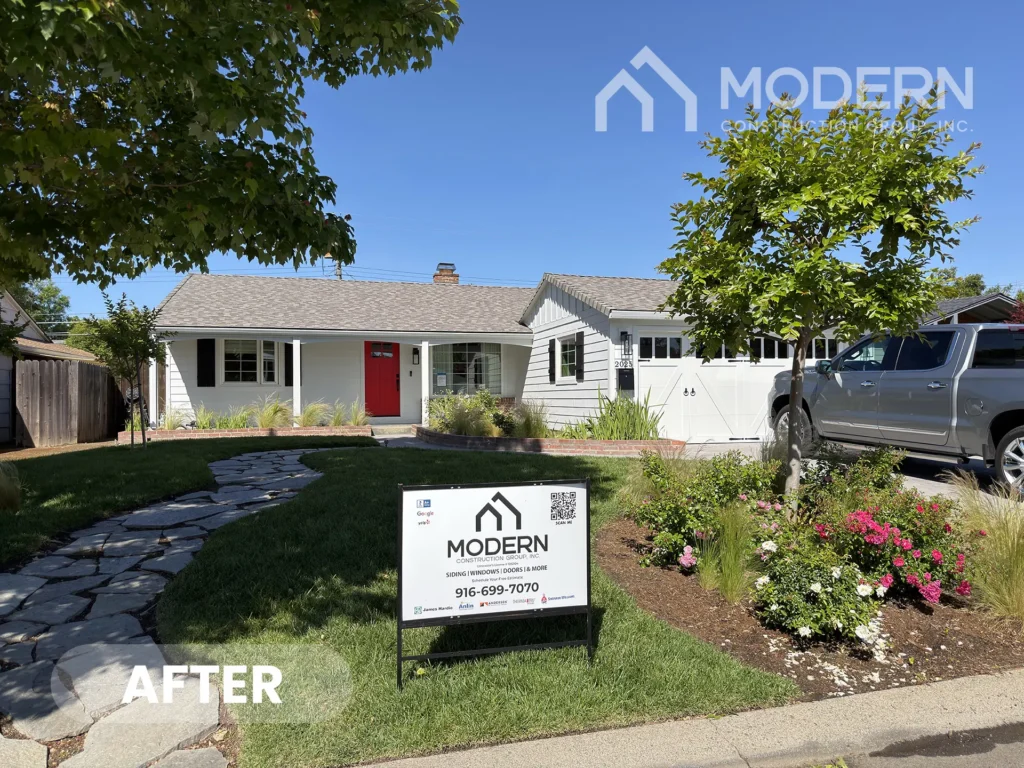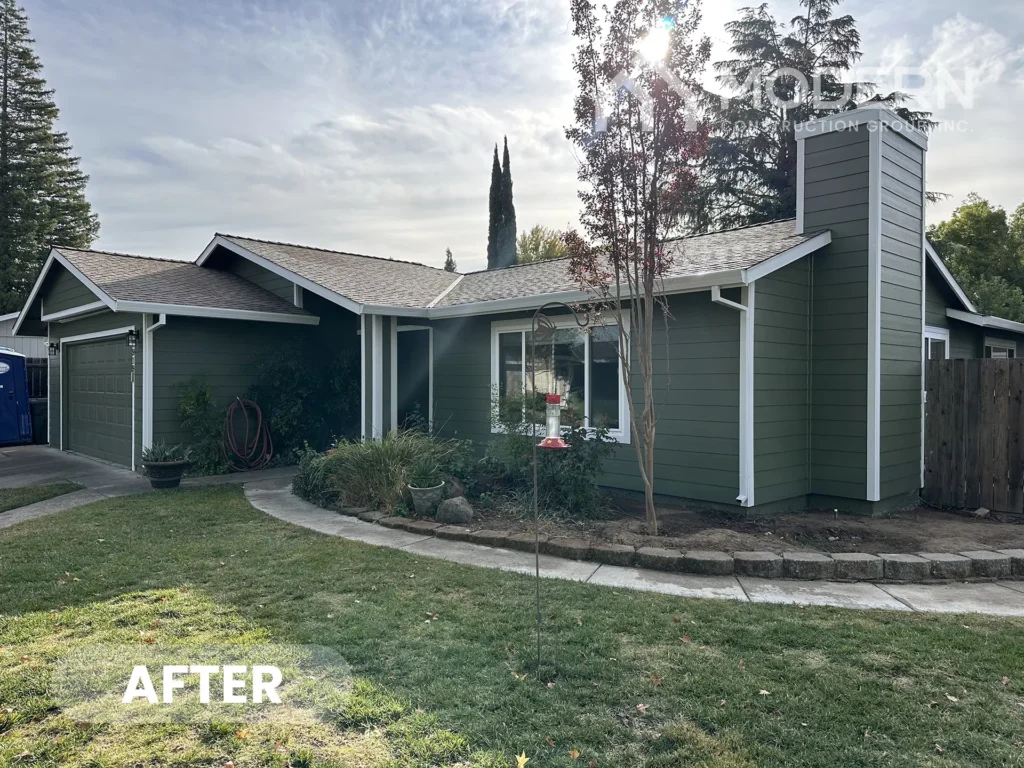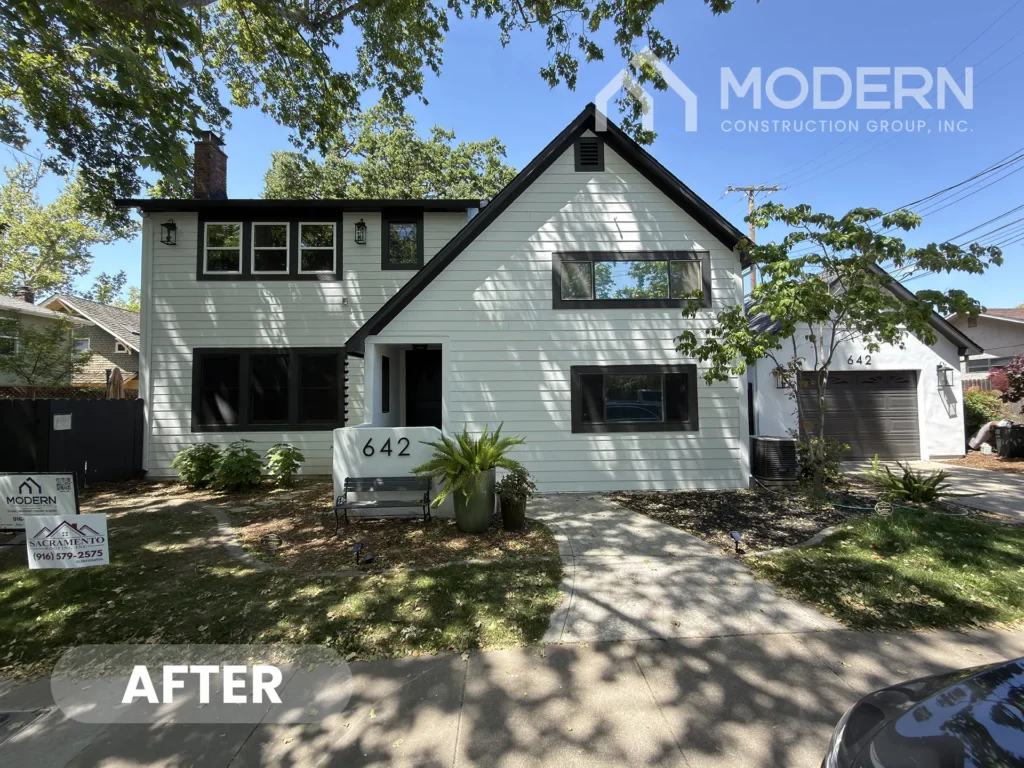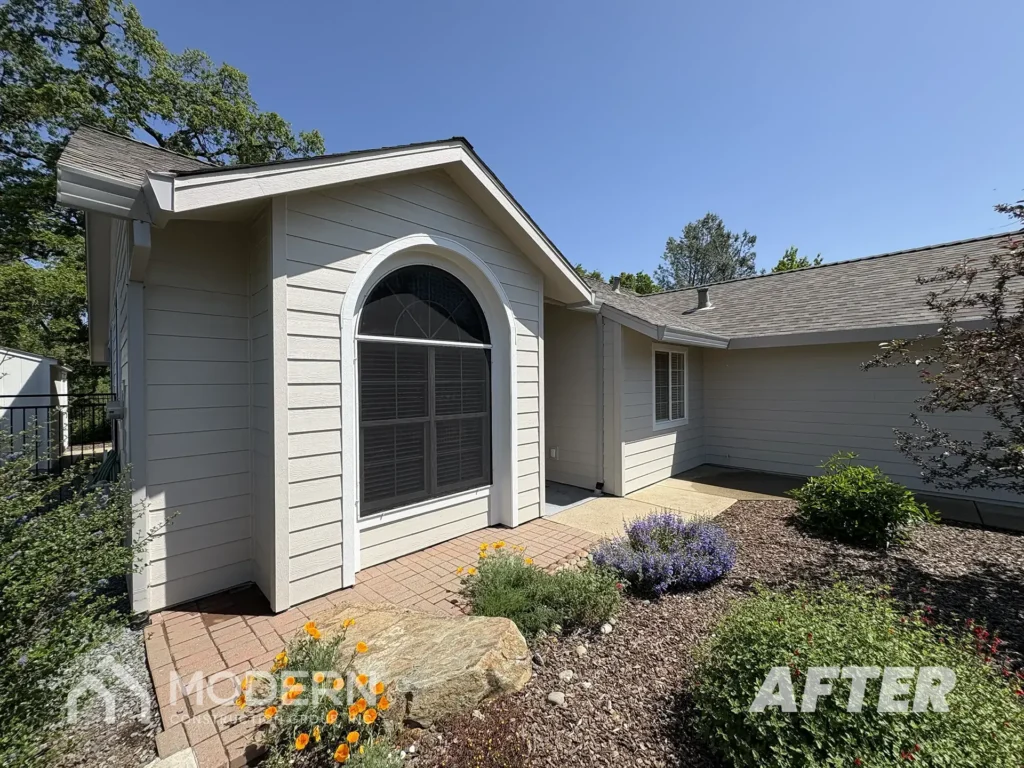
Key Takeaway
Hardie board siding is a fiber cement exterior cladding made from cement, sand, water, and cellulose fibers that is noncombustible, rot resistant, and pest resistant. James Hardie products carry a 30-year non-prorated warranty and are used on 23% of new single-family homes in the U.S. For Northern California homeowners, the material is especially well suited to valley heat, heavy UV, seasonal rain, and WUI wildfire risk. Correct installation by certified professionals is as important as the material itself.
Hardie board siding is James Hardie fiber cement siding, a durable exterior cladding made from cement, sand, water, and cellulose fibers. It’s noncombustible and fire resistant, it doesn’t attract termites or other pests, and it stands up to moisture and rot in a way that solid wood can’t. When it’s installed by certified installers who follow James Hardie’s current requirements, it’s one of the strongest siding materials a homeowner can choose for the long term.
This is Hardie board siding, the complete homeowner guide written for people planning a serious exterior remodel, the kind of 10 to 30 year decision you only want to make once. You’ll get the plain-English definition, the honest pros and limits, the styles and finishes, the warranty facts, and the installation details that separate a premium project from a problem project.
For Northern California homes, James Hardie siding is especially relevant. Valley heat, intense sun with strong UV exposure, seasonal rain, and wildfire risk in WUI areas all push toward exterior siding that resists both weather and flame. One thing to keep in mind throughout: with James Hardie siding, the installer matters as much as the material.
What Is Hardie Board Siding Made Of?
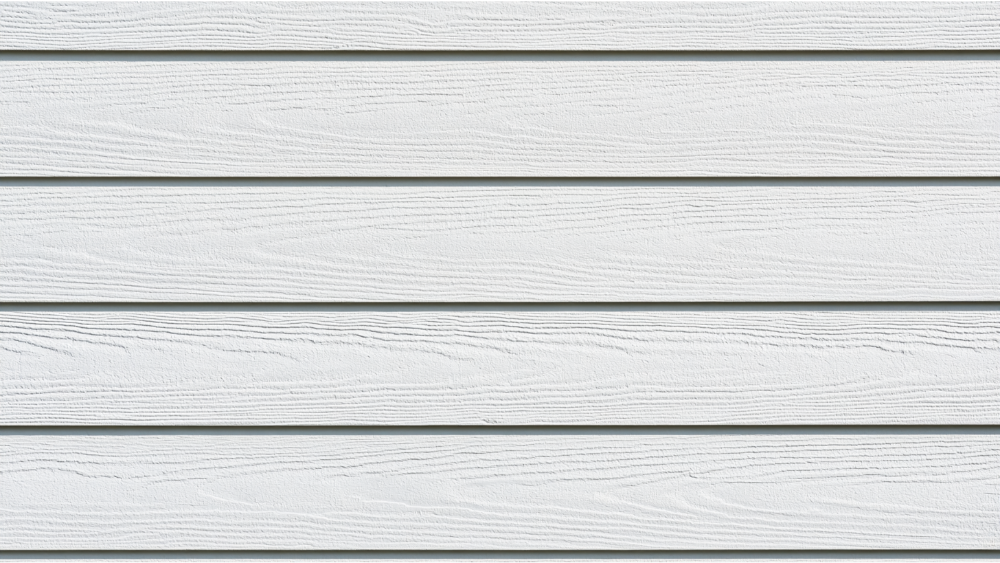
Hardie board siding is a fiber cement product built from a short list of ingredients: Portland cement, sand, water, and cellulose fibers (wood pulp), along with a proprietary finish and additives that the James Hardie company uses in its formulation. That mix is what gives the material its performance.
The cement base is the reason the boards are noncombustible and offer strong dimensional stability. Cement doesn’t burn, and it doesn’t expand and contract the way wood does through wet and dry seasons, so properly installed boards resist cracking and warping over time. The cellulose fibers give the material workability and strength, so it can be cut, nailed, and shaped like siding while avoiding the rot, swelling, and insect damage that plague solid wood. Termites have no interest in it. Unlike wood, moisture doesn’t soak into it.
That combination is why fiber cement has become a mainstream category rather than a niche one. According to NAHB’s analysis of Census data, fiber cement was the main exterior wall material on 23% of new single-family homes started in 2024, putting it right alongside vinyl siding and stucco as one of the most common cladding choices in the country.
Is Hardie Board the Same as Fiber Cement Siding?
Mostly, yes. “Hardie board” is commonly used as shorthand for fiber cement siding, but it specifically refers to James Hardie products. Fiber cement is the material category. James Hardie is the brand that made it a household name. So all Hardie board siding is fiber cement, but not every fiber cement product is one of the Hardie products.
Why Homeowners Choose James Hardie Fiber Cement Siding
You want a home’s exterior that protects your home for decades and looks good doing it. That’s the core reason homeowners keep choosing James Hardie fiber cement siding over other siding materials. It protects your most important investment while giving you the finished look you want, which makes it a fantastic investment for the long term.
The performance case is straightforward. Hardie siding holds up against hail, sun, rot, insects, and fire, and it can withstand damage from the extreme weather events that Mother Nature throws at a home without the cracking or warping you can see in some wood siding. It resists moisture intrusion far better than solid wood, and it holds paint longer, which means fewer repaint cycles and less upkeep over the life of the home. Curb appeal and home value follow naturally when the home’s exterior stays crisp instead of fading and peeling.
Here’s how James Hardie siding compares to the two most common alternatives, in plain terms:
- Versus wood siding: Wood can look beautiful, but it rots, absorbs moisture, and invites termites, and it needs frequent repainting. Fiber cement gives you a similar look without those vulnerabilities.
- Versus vinyl siding: Vinyl siding is combustible and can melt or warp under heat. Unlike vinyl, fiber cement is noncombustible and far more dimensionally stable in high heat.
For Northern California specifically, the climate makes this a genuine advantage, not marketing. Valley heat and relentless UV break down other siding materials and fade field-applied paint quickly. Heavy rain in the wet season tests any siding’s moisture resistance, and coastal-influenced areas add salt air to the mix. Fiber cement is built to take all of it, which is why James Hardie siding performs so well across the Sacramento region and into the foothills where heavy snow can arrive at elevation.
Is Hardie Board Siding Fire Resistant?
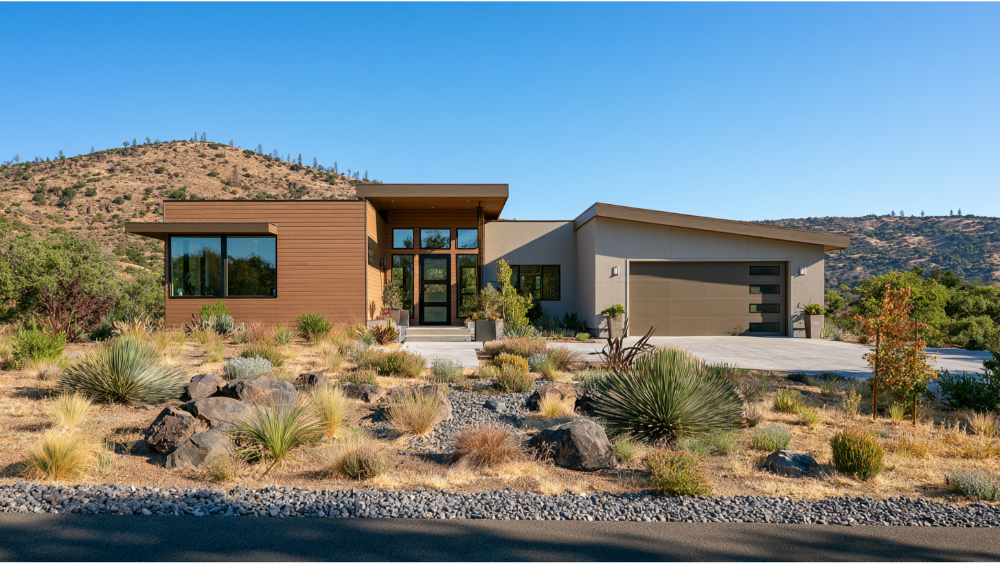
Yes. James Hardie siding complies with ASTM E136 as a noncombustible cladding, which means it won’t ignite when exposed to flame. That’s a meaningful difference from wood siding or vinyl siding, both of which can contribute fuel to a house fire, and it’s one of the biggest reasons fiber cement is the gold standard for Northern California homes in or near fire-prone areas.
A word on language matters here. The accurate terms are “fire resistant” and “noncombustible.” No siding is “fireproof,” and no exterior material makes a home immune to wildfire. James Hardie also notes that fire resistance applies to the board itself, not to any applied paint finish or coating, which can char or be damaged by direct flame exposure. Honest expectations protect you better than overpromises.
This is where WUI areas come in. The Wildland-Urban Interface is the zone where homes meet undeveloped, fire-prone land, and a large share of Northern California, especially the foothill communities around Sacramento, falls into it. In those areas, the siding on your walls is part of your home’s defense and helps your home stand up to ember exposure.
CAL FIRE, through its home hardening guidance, identifies combustible siding along with gaps, holes, rot, and exterior-covering penetrations larger than 1/8 inch as siding-related wildfire vulnerabilities. Their recommendation is to consider replacing combustible old siding with a noncombustible or ignition-resistant material, and to consult a local building official or licensed contractor for wildland-area code requirements. If full replacement isn’t feasible, CAL FIRE notes that replacing at least the bottom 2 feet of siding with a noncombustible material and adding metal flashing is a meaningful step.
Fire-Resistant Siding and Home Hardening in WUI Areas
The California Department of Insurance’s Safer from Wildfires framework lists fiber cement siding as a noncombustible material option and recommends several specific mitigation actions homeowners can take:
- At least 6 vertical inches of noncombustible material at the bottom of exterior walls.
- A 5-foot ember-resistant zone around the home, kept clear of combustible materials.
- Ember- and fire-resistant vents fitted with 1/16 to 1/8 inch noncombustible, corrosion-resistant metal mesh screens.
James Hardie products, including HardieShingle and Hardie Textured Panel, appear on CAL FIRE’s OSFM WUI Products Handbook (September 2, 2025 edition), with the Textured Panel listing showing ASTM E136 and a noncombustible rating. Hardie siding is one layer of a larger home-hardening strategy that also covers roofs, vents, decks, and defensible space. If your home is in a wildland area, talk with your local building official about current code before you plan the project.
Hardie Board Siding Styles, Design Options, and Curb Appeal
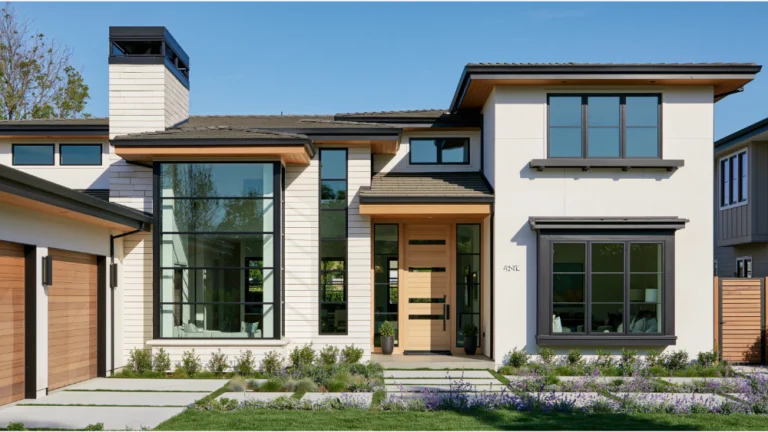
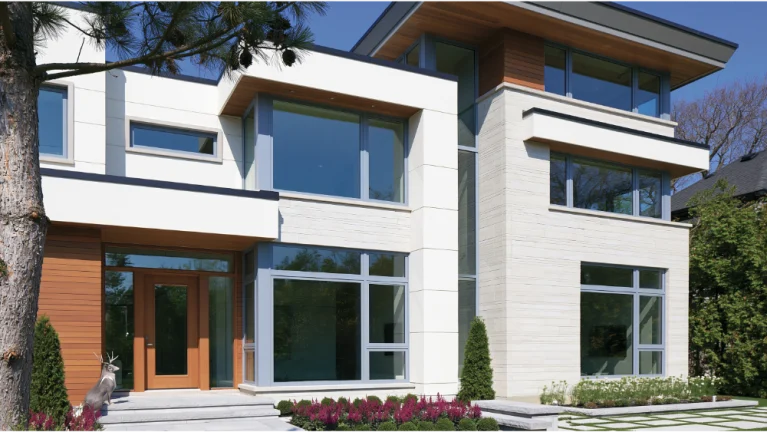
Fiber cement gives you real range across architectural styles, so you can match a traditional design or go modern without switching materials. These siding options make it easy to build the home’s curb appeal you want. Here are the main styles homeowners choose from.
HardiePlank Lap Siding and Beaded Smooth Options
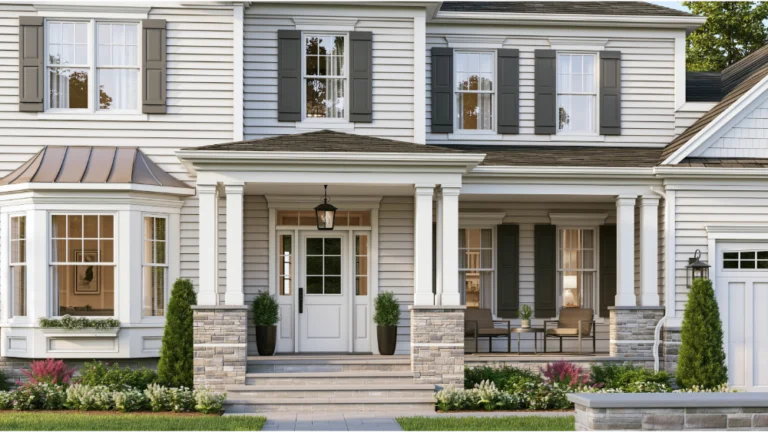
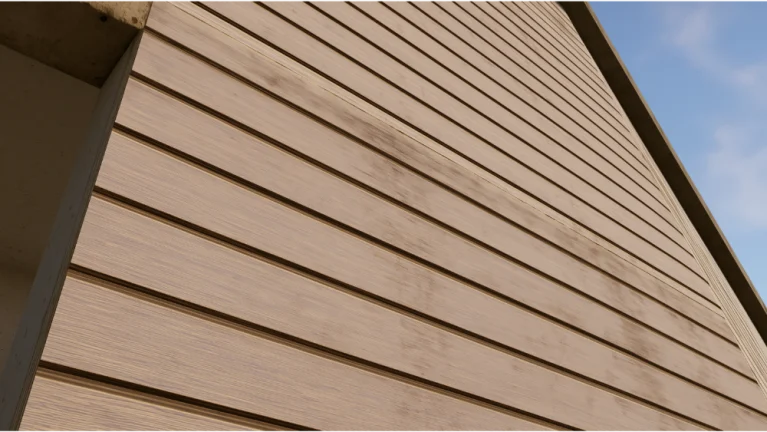
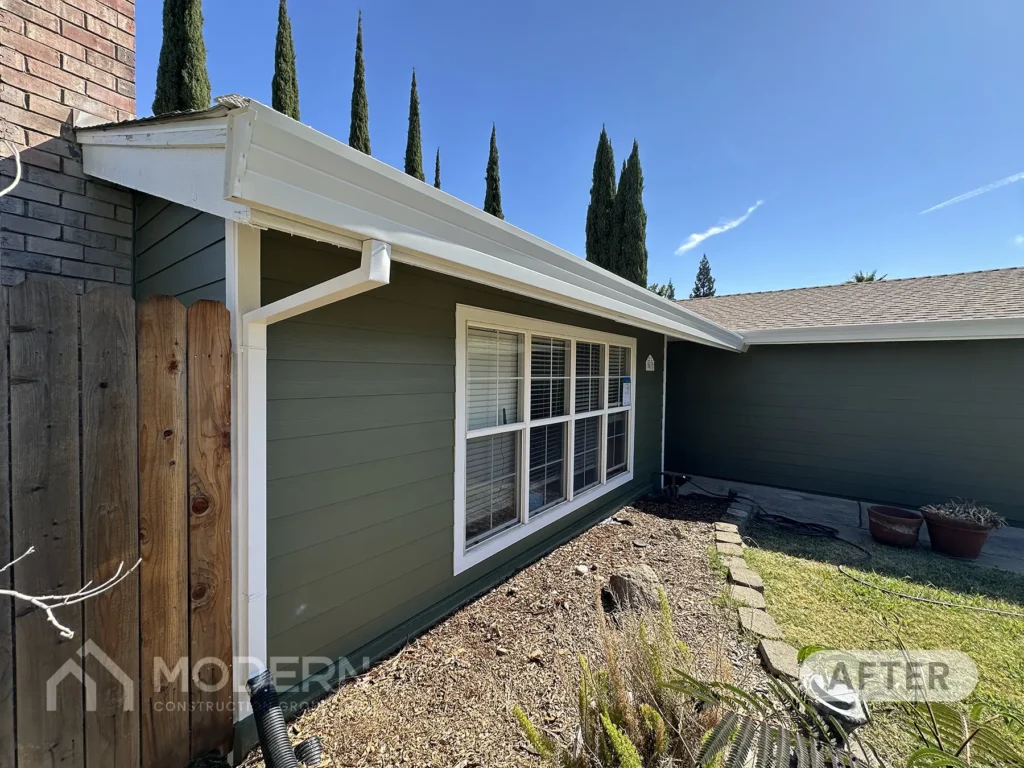
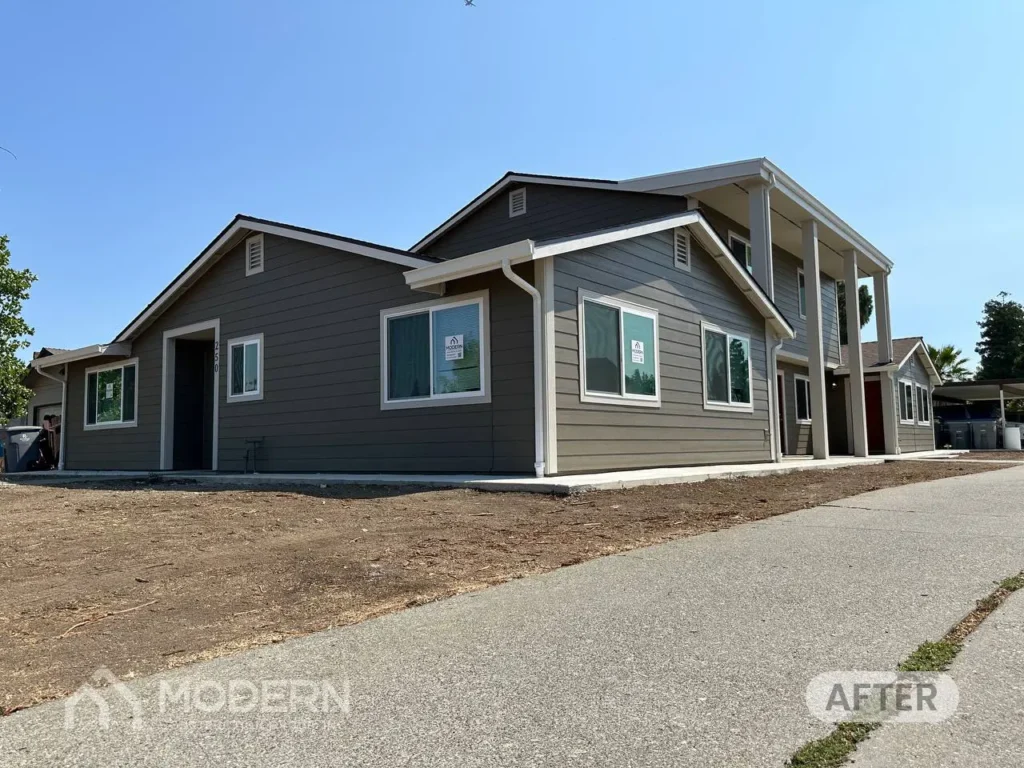
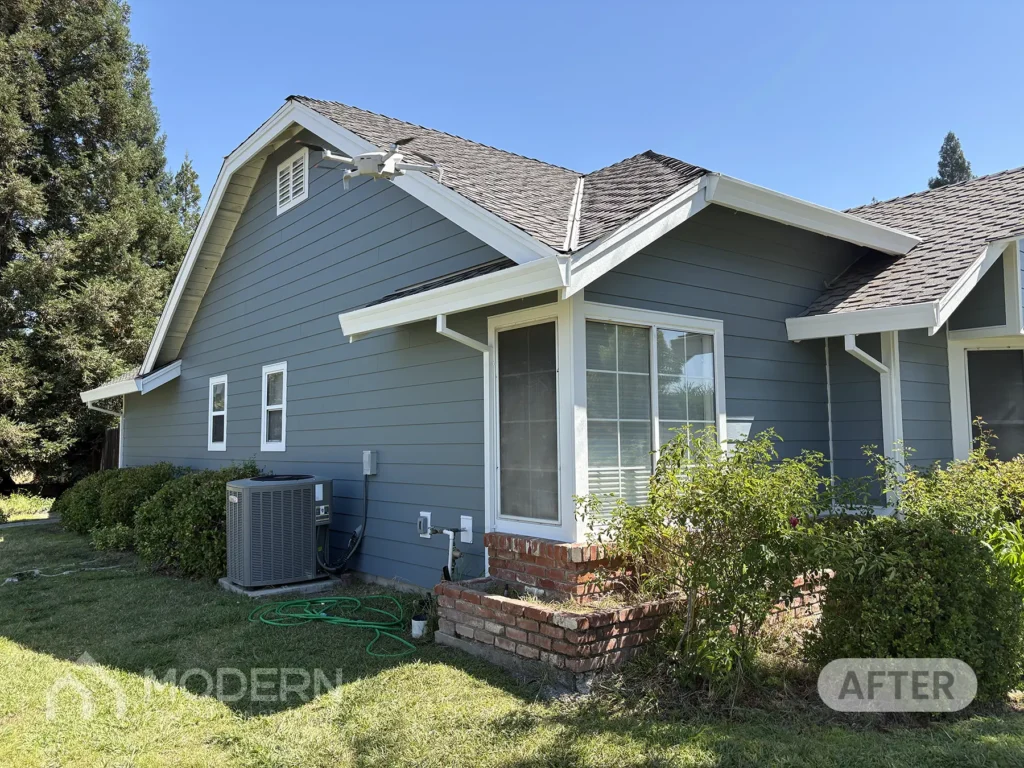
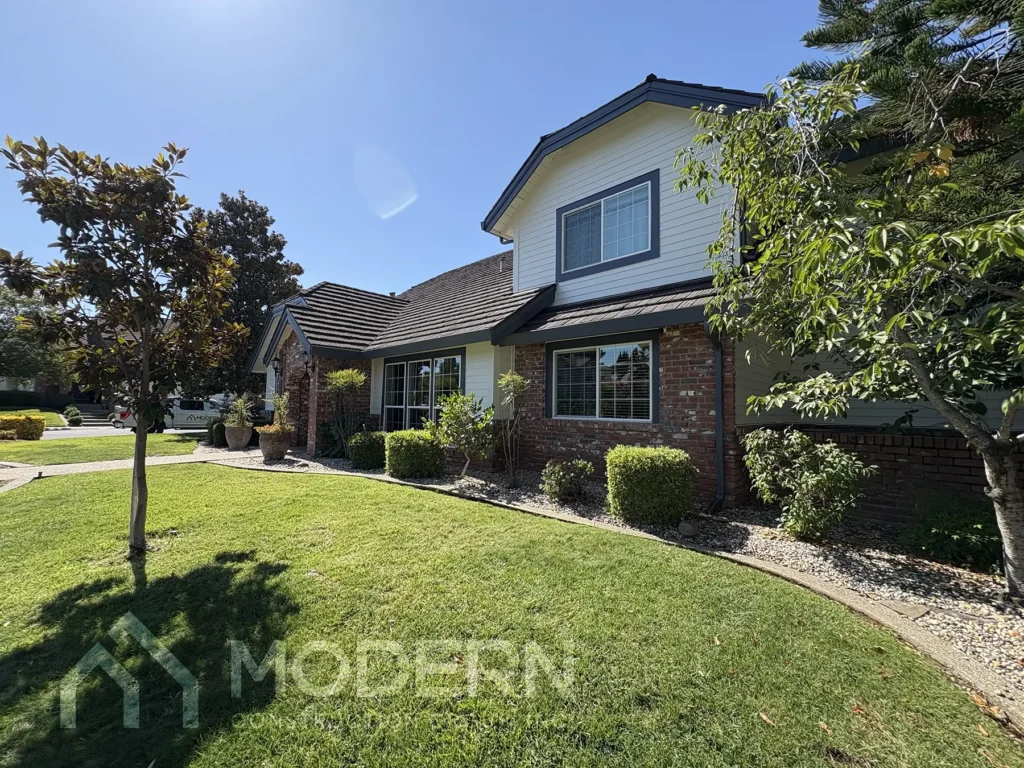
HardiePlank lap siding is the classic horizontal look, and the most popular choice. It comes in textures like wood grain for a traditional feel or a beaded smooth profile for something cleaner. Lap siding suits a huge share of homes because it reads as familiar and timeless, and the crisp deep shadow lines it creates give a facade real depth.
Hardie Panel Vertical Siding
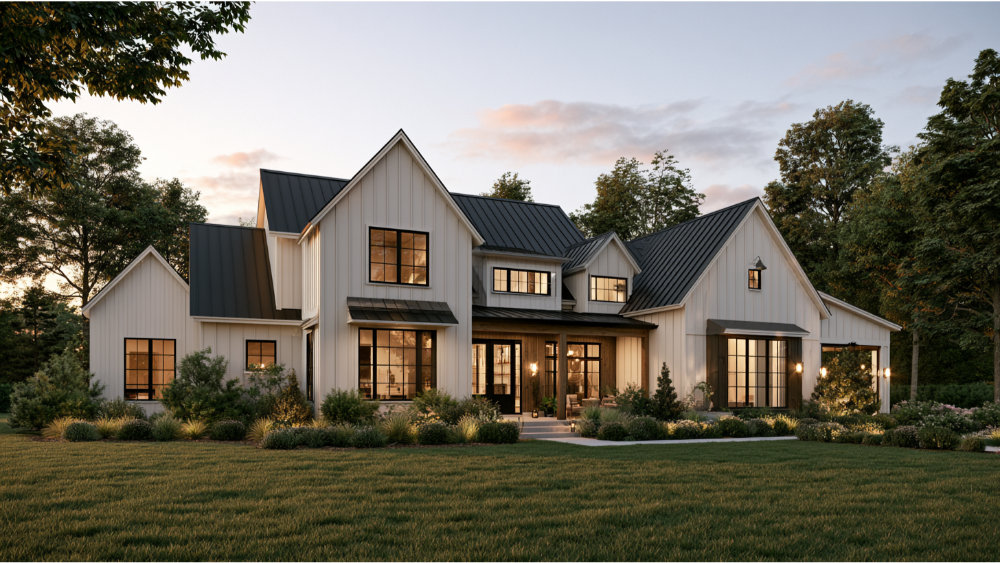
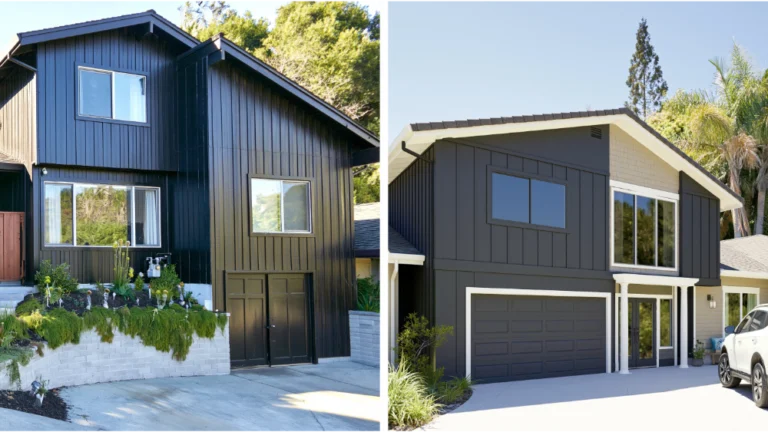
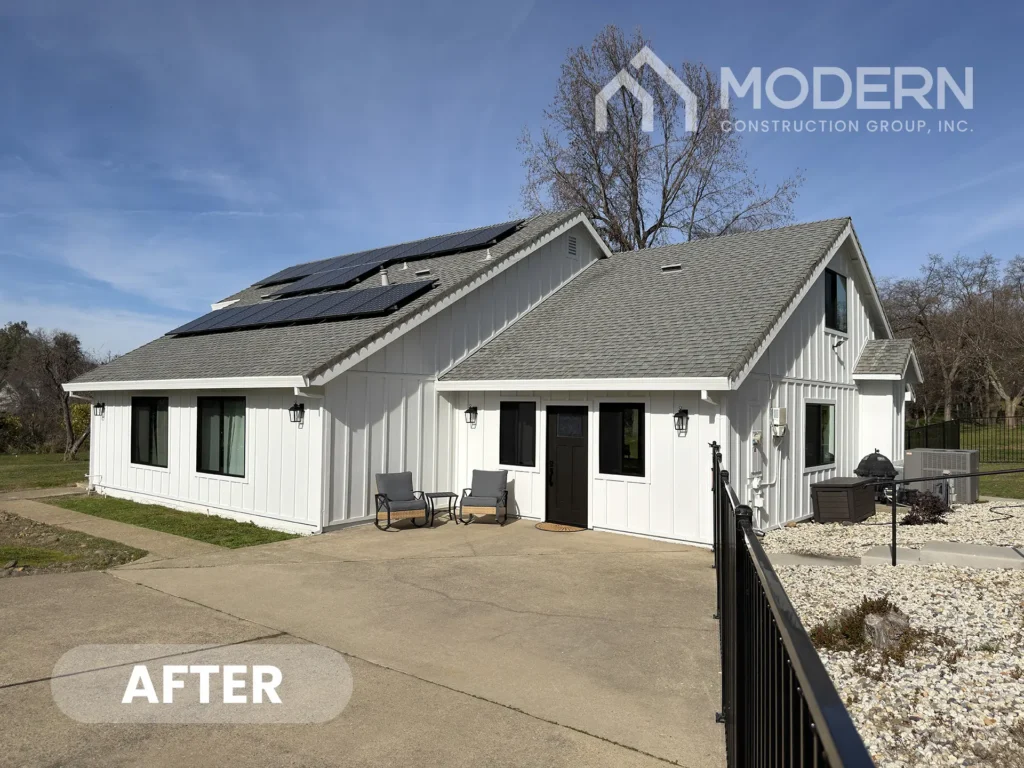
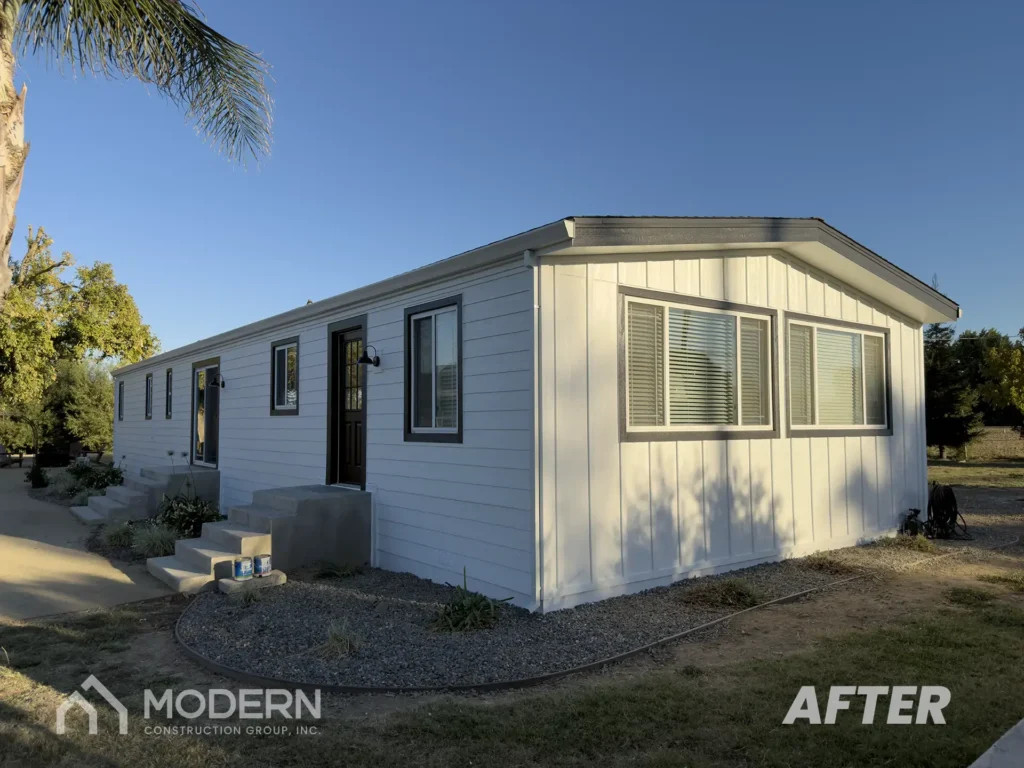
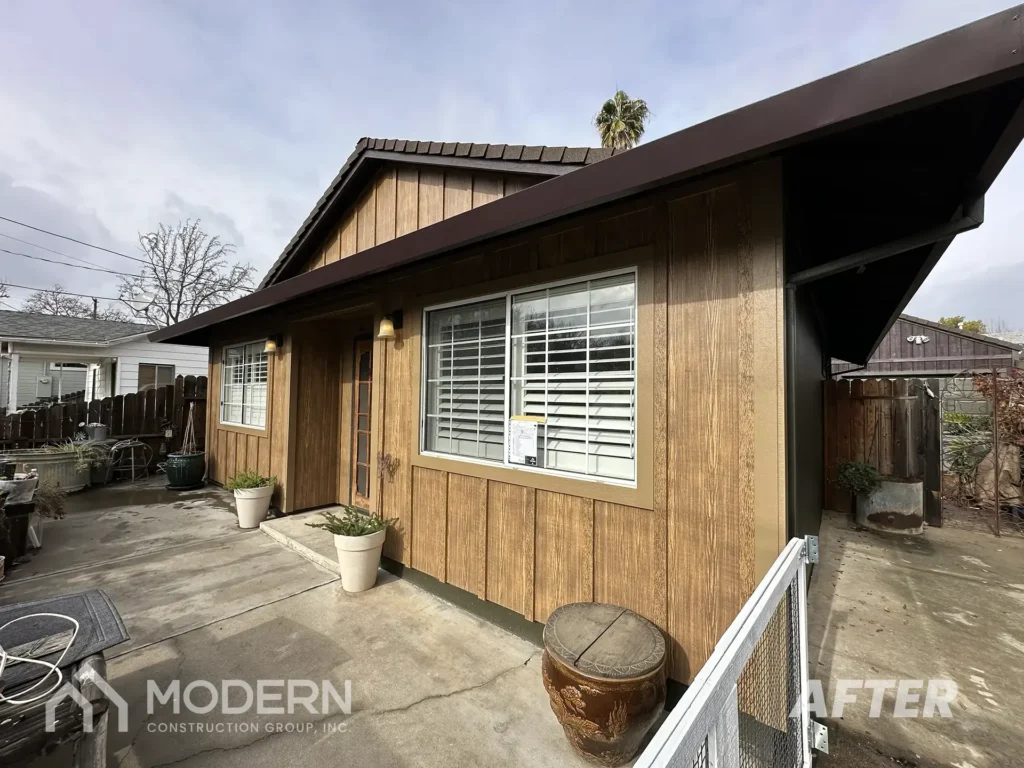
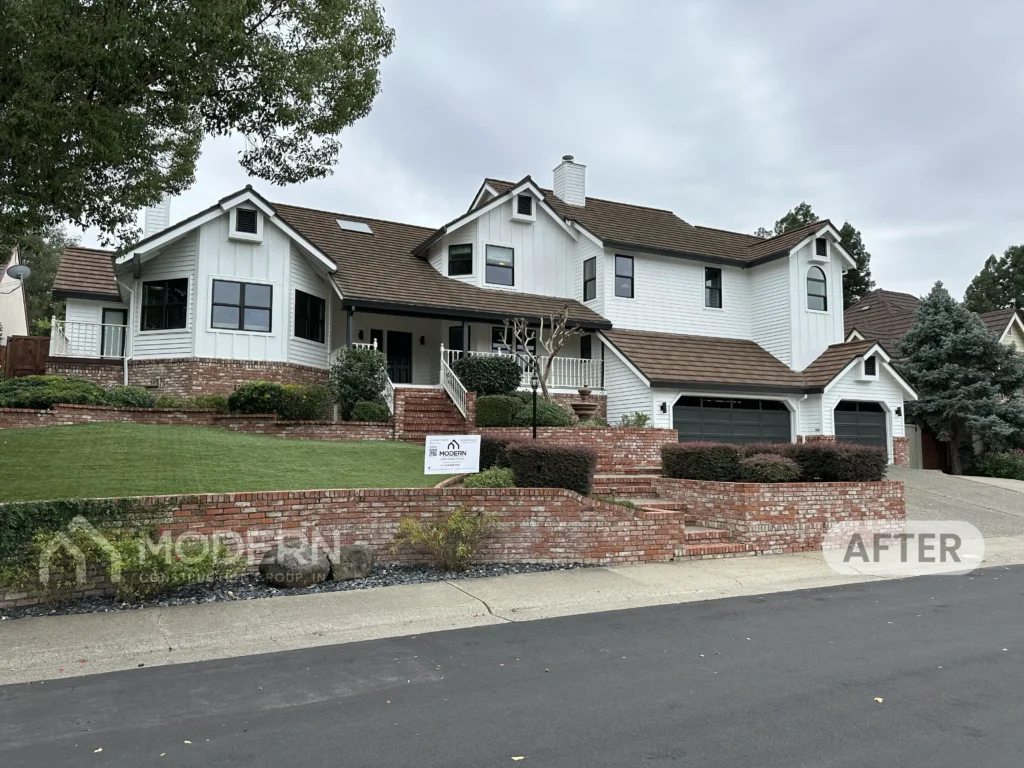
Hardie panel siding runs as vertical siding and is available in textured and smooth panels. Paired with trim battens, hardie panel is how you get the board-and-batten look that works so well on modern farmhouse designs. On its own, hardie panel siding gives a clean, contemporary face to a home.
Hardie Shingle Siding
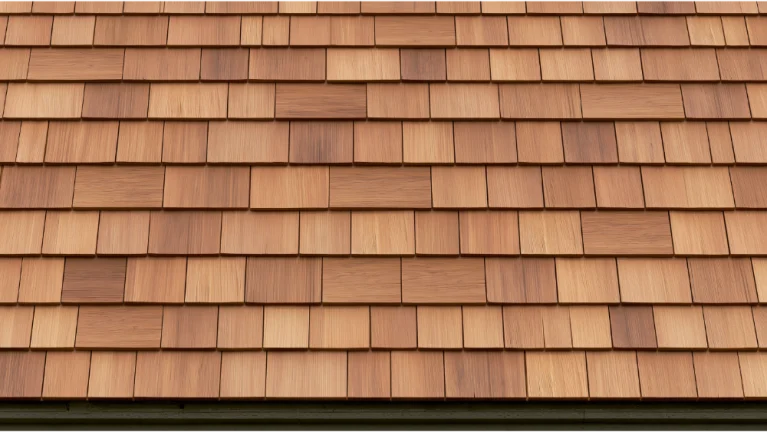
A shingle or shake appearance, often used as an accent on gables and entries or across the whole home for a traditional, cottage-style feel.
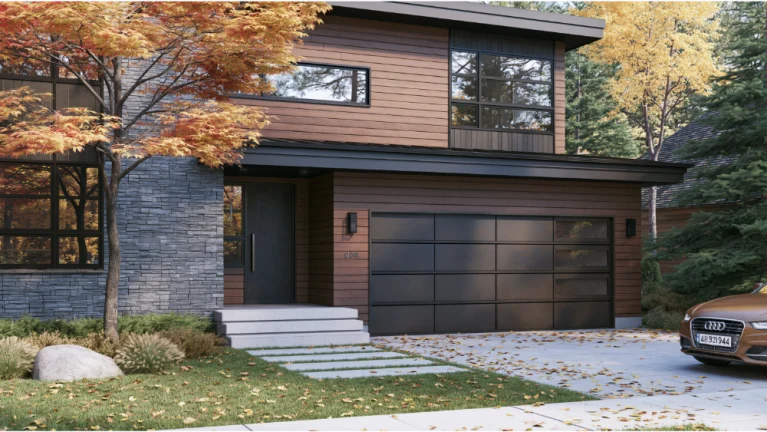
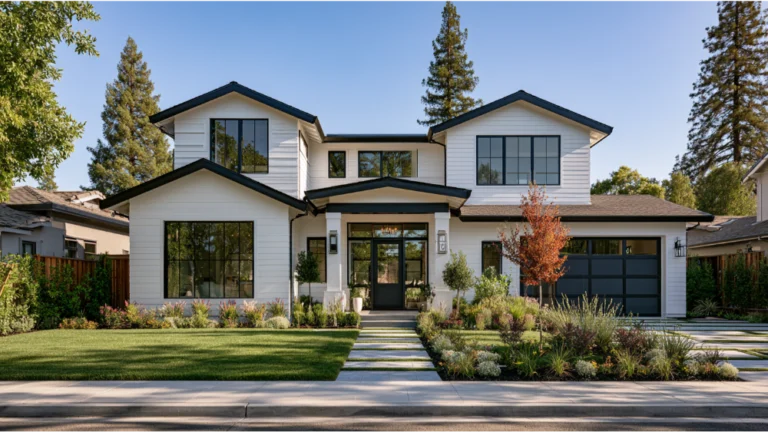
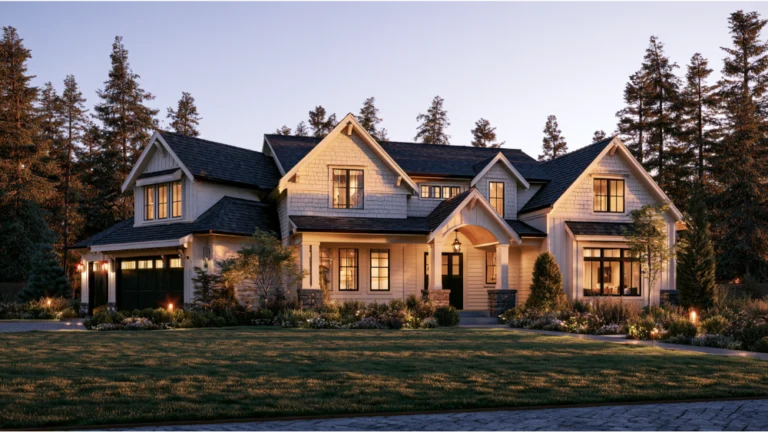
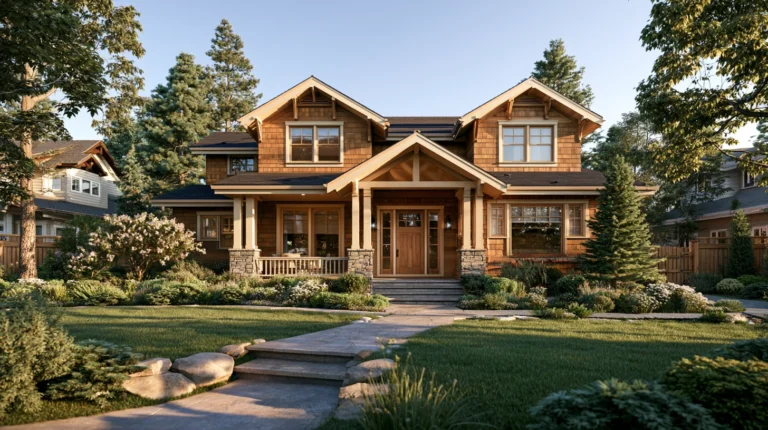
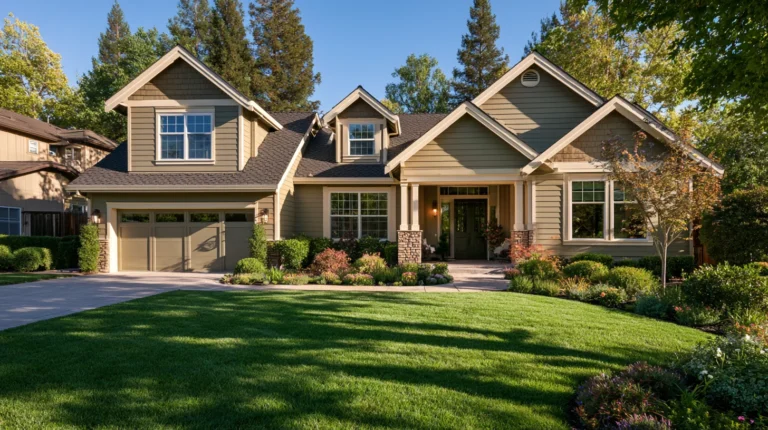
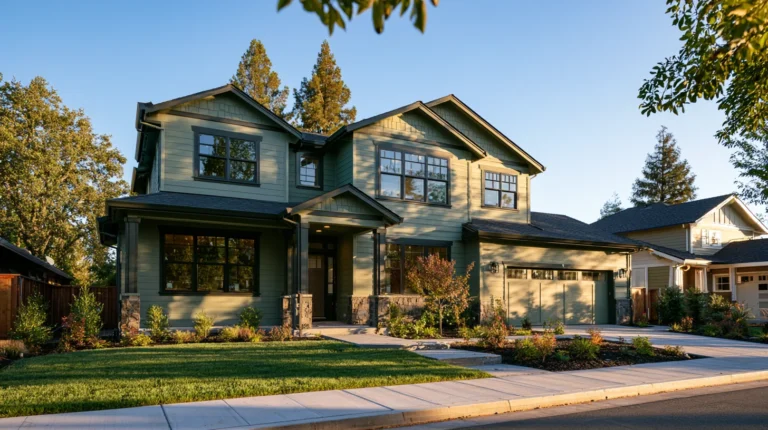
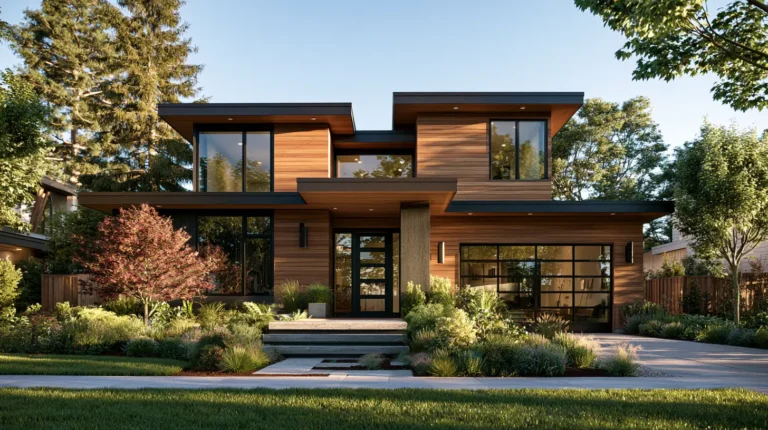
For Northern California, style choice tends to follow the home. Traditional Sacramento neighborhoods lean toward classic lap siding, while newer builds and remodels often favor the modern farmhouse board-and-batten look with hardie panel siding. Foothill homes frequently mix profiles to fit their setting. If your property is in an HOA, check its exterior guidelines early, since color and profile approvals can shape your options. The wide color selection ties directly into ColorPlus Technology, which is worth understanding before you pick a finish.
What Is ColorPlus Technology?
ColorPlus Technology is James Hardie’s factory applied finish, an oven-cured color coating. Instead of painting the boards on-site after installation, the color is baked onto the product in a controlled manufacturing environment. That process is engineered to be UV-resistant and to hold color longer than field-applied paint, giving you a vibrant finish that is a real advantage under Northern California’s strong sun and valley heat.
The finish carries a 15-year limited warranty covering both paint and labor against peeling, cracking, and chipping. That’s a separate, specific promise about the coating, distinct from the product warranty on the board itself.
It helps to understand the two ways Hardie siding can arrive. Primed siding comes ready to be painted on-site, and doing that well usually takes multiple coats of quality exterior paint in whatever color you choose. ColorPlus siding comes with the proprietary finish already cured on, in one of James Hardie’s available colors. Both are valid siding options, but they behave differently over time, and the factory finish is built for longevity and low maintenance.
One important caution: if you have ColorPlus siding and later apply a third-party paint over it, you can void the James Hardie ColorPlus Technology finish warranty. If you’re drawn to the fade resistance of the factory finish, plan your color choice up front so you can keep that warranty intact.
How Long Does Hardie Board Siding Last?
Hardie board siding lasts for decades when it’s installed correctly and maintained. Fiber cement resists moisture damage and withstands extreme weather without cracking or warping, which is a big part of why it holds up so long in the real world.
It’s worth separating two ideas that often get blurred: warranty and lifespan. James Hardie offers a 30-year non-prorated warranty on its fiber cement products, which means the coverage doesn’t shrink as the years pass. That’s a great warranty from the manufacturer on the product, and it’s a strong signal of confidence. It’s not the same thing as the material’s real-world longevity, which depends heavily on how the siding was installed and cared for.
The manufacturer’s warranty is a transferable warranty, which adds resale value if you sell the home during the coverage period. We’d steer you away from anyone promising “lifetime” siding, because the honest, supportable claim is the 30-year non-prorated coverage. What actually drives how long your siding performs is correct installation and maintenance, which is exactly where a careful homeowner should focus attention.
Maintenance: What Homeowners Should Expect
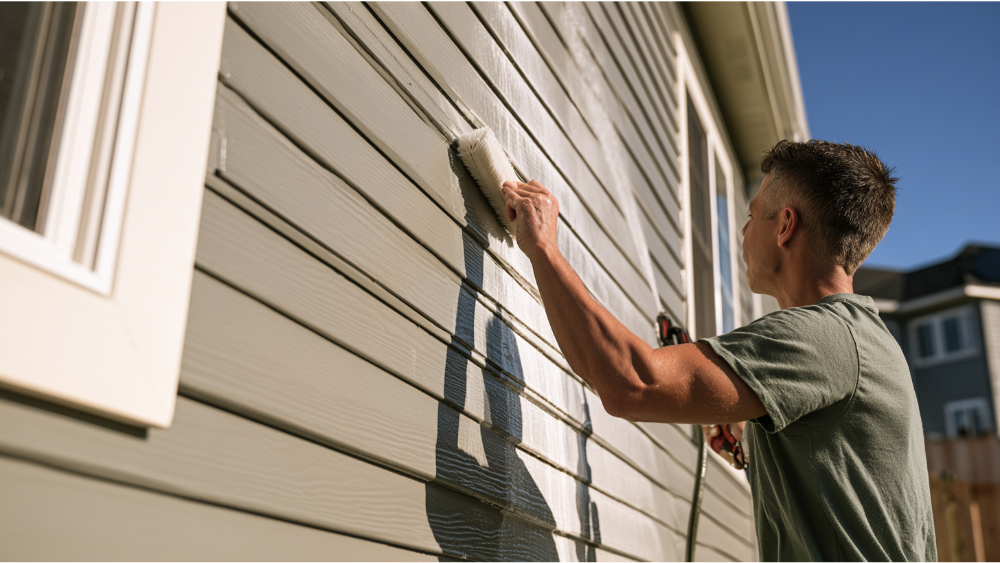
Hardie siding is low maintenance, but it isn’t no maintenance. A little routine care keeps it performing and looking right for the long haul, and the low maintenance nature of fiber cement is a big reason many homeowners choose it over wood. Here’s what to expect:
- Wash it once or twice a year. Every 6 to 12 months, use a soft brush, soapy water, and a garden hose. Avoid high-pressure washing or abrasive methods that can damage the finish.
- Inspect caulk and sealant annually. Check the transitions around windows and doors once a year and reseal where you see gaps or wear. These joints are where moisture likes to find a way in.
- Touch up scratches and chips promptly. Use the appropriate ColorPlus touch-up product for factory-finished siding so the repair matches and stays protected.
- Keep a gap between siding and landscaping. Don’t let mulch, soil, or plantings pack against the boards, since sustained contact invites moisture absorption and mold growth at the base of the wall.
None of this is demanding, but staying on top of it is what keeps the material doing its job and keeps you inside the terms of your warranties.
The James Hardie Siding Installation Process and What Can Go Wrong
This is the part of the installation process most homeowners underestimate. A great product installed poorly can fail, and improper installation can both cause moisture problems and void the manufacturer’s warranty. Fiber cement must be installed by trained professionals using the right tools and the current James Hardie instructions for the job. Here’s what separates a premium project from a problem one.
Incorrect clearances. James Hardie publishes minimum clearances that keep the siding away from standing water and hard surfaces. As examples from a James Hardie HZ10 quick-start guide, that can mean roughly 6 inches from siding to the ground, about 1 inch from slabs, paths, steps, and decks, and around 1/4 inch above flashing, with “do not caulk” noted in certain flashing details. These are examples only, and a good installer works from the current, job-specific instructions rather than memory.
Missing or improper flashing. Flashing directs water away from vulnerable transitions. Skip it or install it wrong, and water gets behind the siding.
Improper fastening. Nails and screws have to be placed and driven correctly. Over-driven, under-driven, or wrongly spaced fasteners compromise how the wall performs, and this matters whether you’re installing HardiePlank lap siding or hardie panel siding.
Incorrect caulking. Some joints should be caulked and some shouldn’t. Getting this backward traps moisture instead of shedding it.
Poor cutting and dust control. Cutting fiber cement releases respirable crystalline silica, which OSHA regulates under its construction silica standard (with a permissible exposure limit of 50 micrograms per cubic meter over 8 hours). James Hardie points installers to OSHA Table 1 controls, including a specific engineering control for cutting with a handheld circular saw. Once the siding is installed on your home there’s no dust concern; the risk is entirely about how it’s cut and handled during the work.
Installing over hidden rot or damaged substrate. Covering up soft, water-damaged sheathing hides a problem that keeps growing behind the new siding.
Every one of these comes down to workmanship. It’s why James Hardie’s own materials warn that failing to follow their instructions and applicable building codes can affect system performance and void the product warranty, and it’s why a careful installation process with certified installers is worth insisting on.
Can Hardie Board Be Installed Over Old Siding?
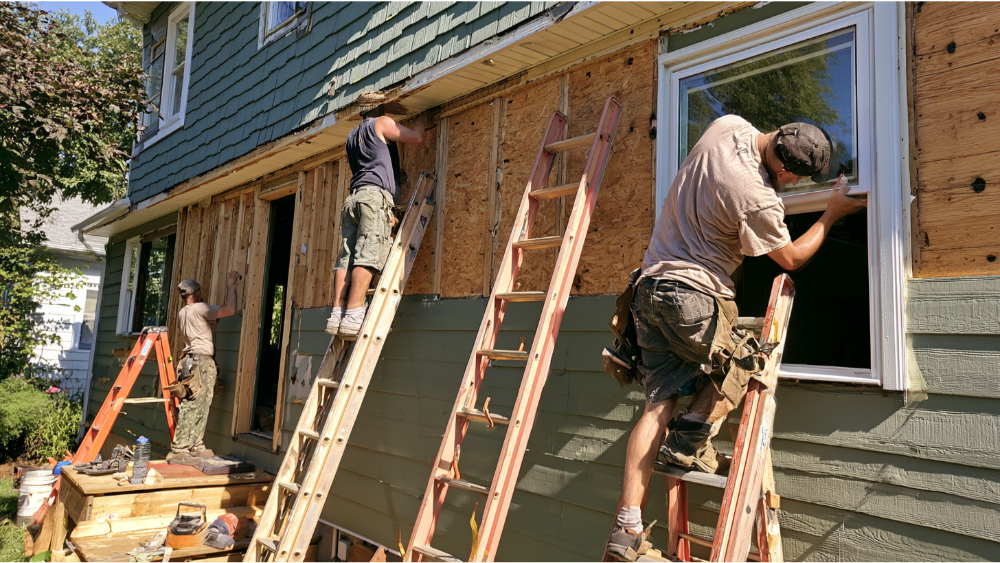
Homeowners ask this hoping to avoid the disruption and upfront cost of a tear-off, which is a fair instinct. The honest answer is that it depends. Whether you can install new fiber cement over existing siding comes down to the condition of what’s already there, how flat and sound the wall is, whether there’s moisture or hidden rot, local code, and James Hardie’s own requirements.
For a premium, long-term project, the right call is usually a full evaluation and proper substrate preparation rather than covering over the old material. Layering new siding on top of a compromised wall can trap moisture and hide damage, which defeats the point of investing in a 30-year product. A careful contractor inspects the wall before committing to an approach.
Older Homes and Asbestos Caution
If your home is older, the existing cement siding or shingles may contain asbestos. The EPA and CPSC note that these materials are unlikely to release fibers unless they’re cut, drilled, or sawed, which is exactly what happens during a residing project. Before disturbing suspect siding, have it tested or evaluated. If material is damaged or will be disturbed, the EPA advises that repair or removal be handled by a trained, accredited asbestos professional. This is a safety step worth taking seriously, not skipping.
California and Sacramento Homeowner Considerations
A siding project in California comes with homeowner protections and requirements worth knowing before you sign anything. Because fiber cement is specifically engineered for durability and is more environmentally friendly to maintain than materials that need frequent repainting, it fits well with the long-term thinking behind these rules. In the City of Sacramento, siding and window replacement are both listed among examples of work that require a building permit, so plan for permitting as part of the project.
The California Contractors State License Board (CSLB) recommends verifying any contractor’s license through its official license-check tool before you hire or sign. A few other CSLB rules protect you directly:
- A written contract is required for home improvement projects over $500, and it should list the contractor, business address, and license number.
- A contractor can’t ask for a down payment of more than 10% of the contract price or $1,000, whichever is less.
- The contractor license bond increased to $25,000 on January 1, 2023.
It also helps to know that the 2025 California Building Standards Code took effect January 1, 2026, and includes the new California Wildland-Urban Interface Code, so wildland-area requirements have been consolidated and updated. Your local building department is the authority on what applies to your address.
Modern Construction Group is a family-owned company operating under California General Building License #1092104, and we’re licensed, bonded, and insured. Family ownership isn’t a slogan for us. It means someone with a personal stake is accountable for how your project turns out.
How to Choose a Reputable Contractor for Hardie Siding
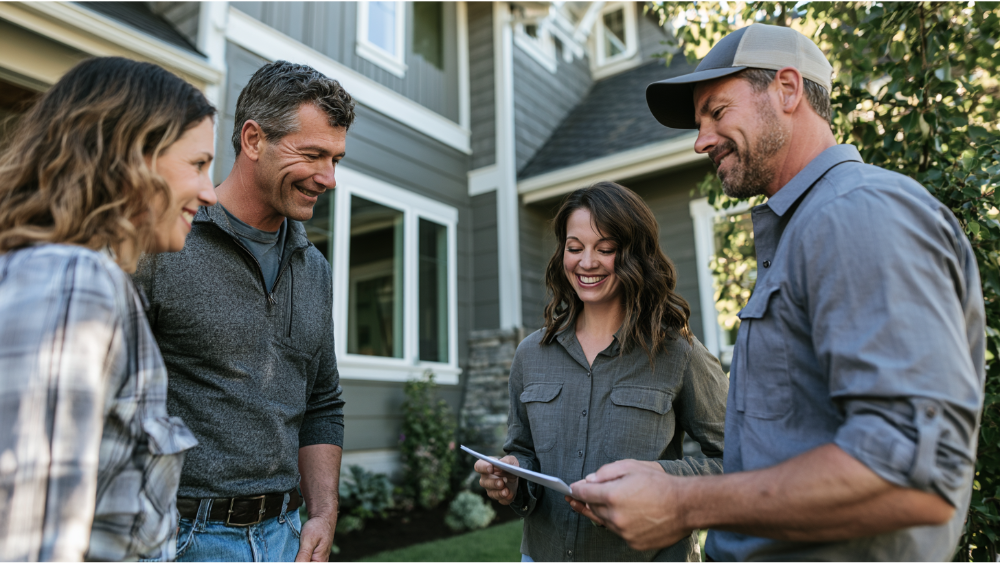
The contractor you hire determines whether you get 30 years of performance or an expensive headache. Lead your evaluation of potential contractors with credentials and workmanship, not the lowest bid, and treat certification as the baseline for a reputable contractor. Here’s what to ask before you commit:
- Are you a James Hardie Alliance Select Contractor? This is an exclusive designation awarded to select installers who meet James Hardie’s standards for installation expertise, customer service, and business practices.
- What workmanship warranty do you offer? This is separate from the manufacturer’s product warranty and covers the quality of the installation itself.
- Do you follow James Hardie’s current installation instructions and the correct Hardie Zone details? The right answer is a clear yes.
- How do you handle flashing, clearances, the water-resistive barrier, tear-off, and hidden damage? A specialist will speak fluently about all of it.
- Will you pull permits and support HOA approvals where needed?
- Can I get the full scope in writing? A detailed written scope protects both sides.
Verify the license number through CSLB, read reviews for evidence of accountability, and treat a contractor’s willingness to explain the “why” as a good sign. A reputable contractor wants you to make an informed decision.
Why Modern Construction Group Specializes in James Hardie Siding
Rather than offering dozens of services, we’ve chosen to master the two most impactful exterior improvements for Northern California homes: James Hardie fiber cement siding and Anlin window and door replacement. Quality over quantity is a deliberate choice, and it’s how we deliver expert installation on every project.
We’re a family-owned company focused on the Sacramento region and surrounding Northern California communities, which means we know the climate-specific demands your home faces, from valley heat and UV to WUI fire risk in the foothills. We’re a James Hardie Alliance Select Contractor, one of the select few installers certified to James Hardie’s highest standards. We’re licensed, bonded, and insured under License #1092104, and we back our siding installation with a 15-year workmanship warranty that stands alongside James Hardie’s 30-year non-prorated product warranty.
Our team brings over 25 years of experience to the work, whether the project calls for classic lap siding or hardie panel siding on a modern farmhouse. That combination of specialization, credentials, and hands-on accountability is how we protect and enhance your most important investment, and how we make sure it’s done right the first time. Ready to start? Get your free estimate today by calling (916) 699-7070, and ask about financing options while you’re at it.