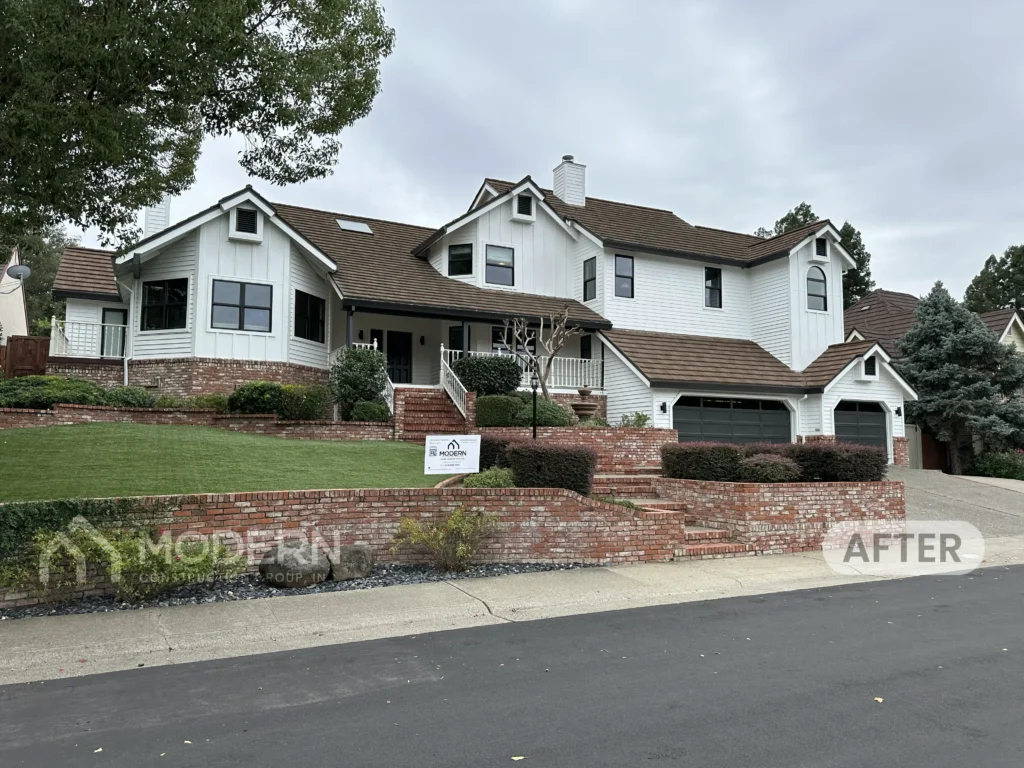
Key Takeaway
Black siding is a durable, low-maintenance choice when you select a dimensionally stable material like fiber cement with a factory-applied, fade-resistant finish. James Hardie fiber cement comes with a 30-year material warranty and ColorPlus Technology engineered to resist fading, peeling, and chipping. In hot climates, charcoal or slate tones with solar-reflective pigment outperform true black on heat management.
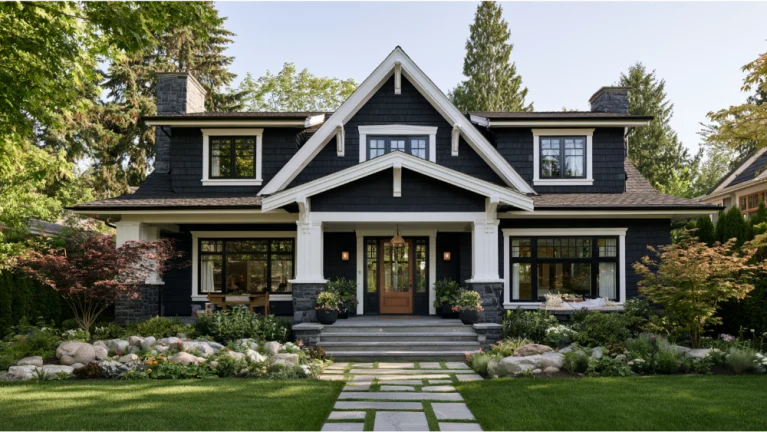
A black house exterior can transform a home, and it can hold that look for decades. How it performs over the next 10 to 30 years depends far more on the siding material, the finish, and the quality of installation than on the color itself. Choose a dimensionally stable siding with a durable, fade-resistant finish and the color becomes a design decision rather than a maintenance gamble.
If you’re weighing a dark exterior for your next siding project, the details that matter are heat, fading, material durability, design pairings, and upkeep.
What Does “Black Siding” Actually Mean?
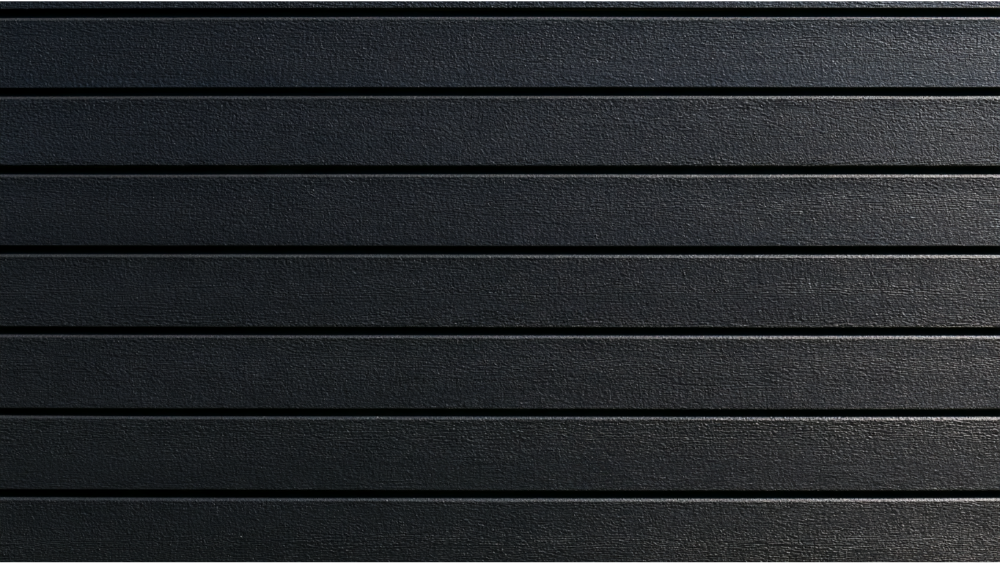
The phrase covers a lot of ground. Three distinctions shape everything that follows:
- Color vs. material. Black describes a finish applied to fiber cement, vinyl siding, metal, and wood, and those products behave very differently in the sun.
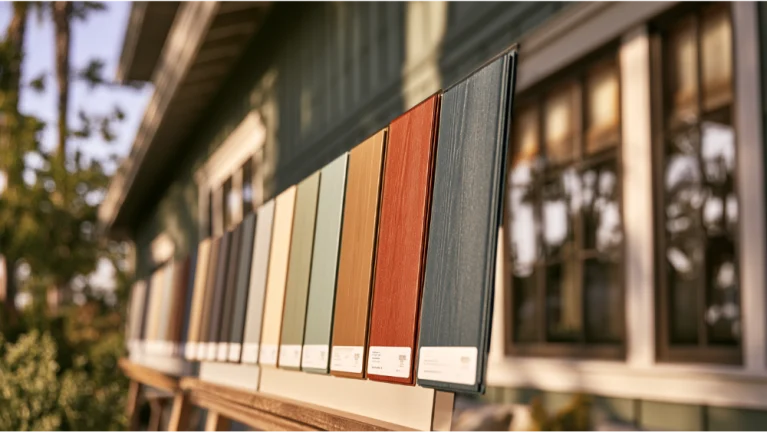
- Factory ColorPlus finish vs. primed-and-painted. James Hardie’s factory-applied ColorPlus® Technology colors are cured onto the board before it ships. The alternative is James Hardie primed siding and trim, professionally painted on site. Both are legitimate paths to a dark exterior, and we offer both.
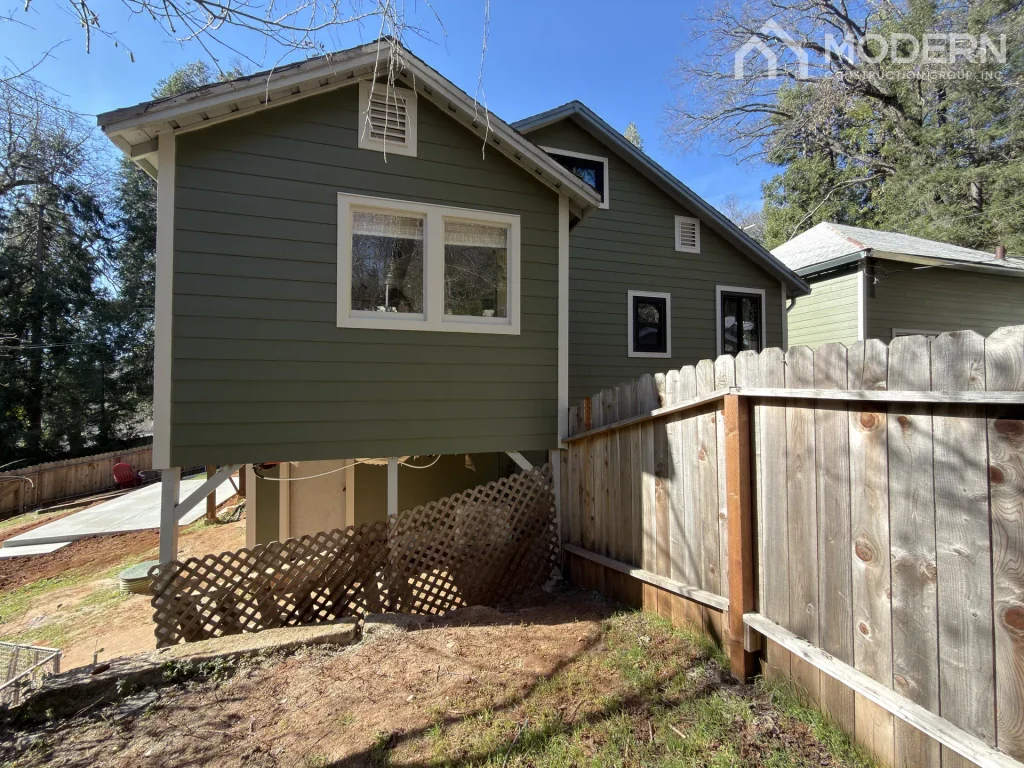
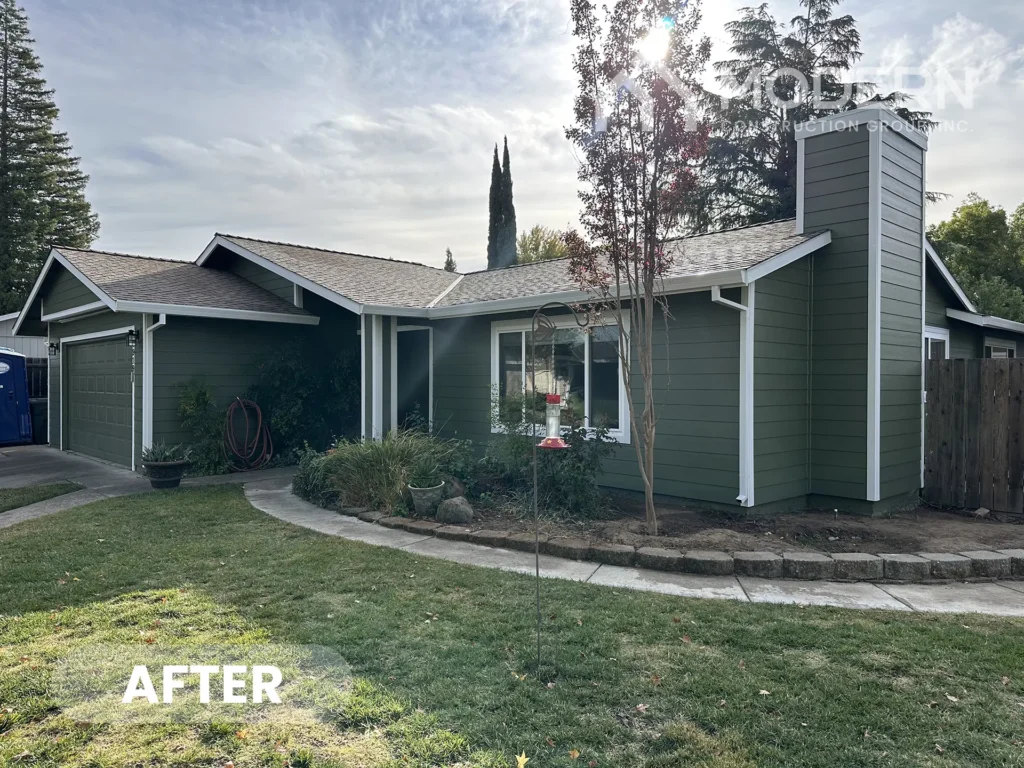
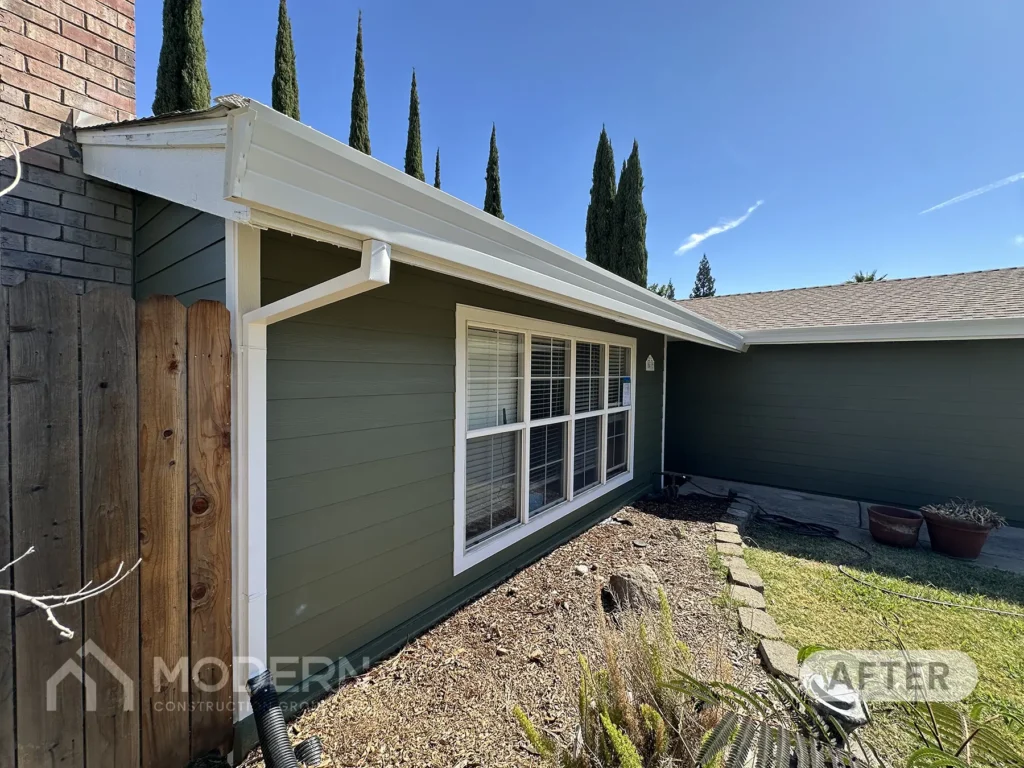
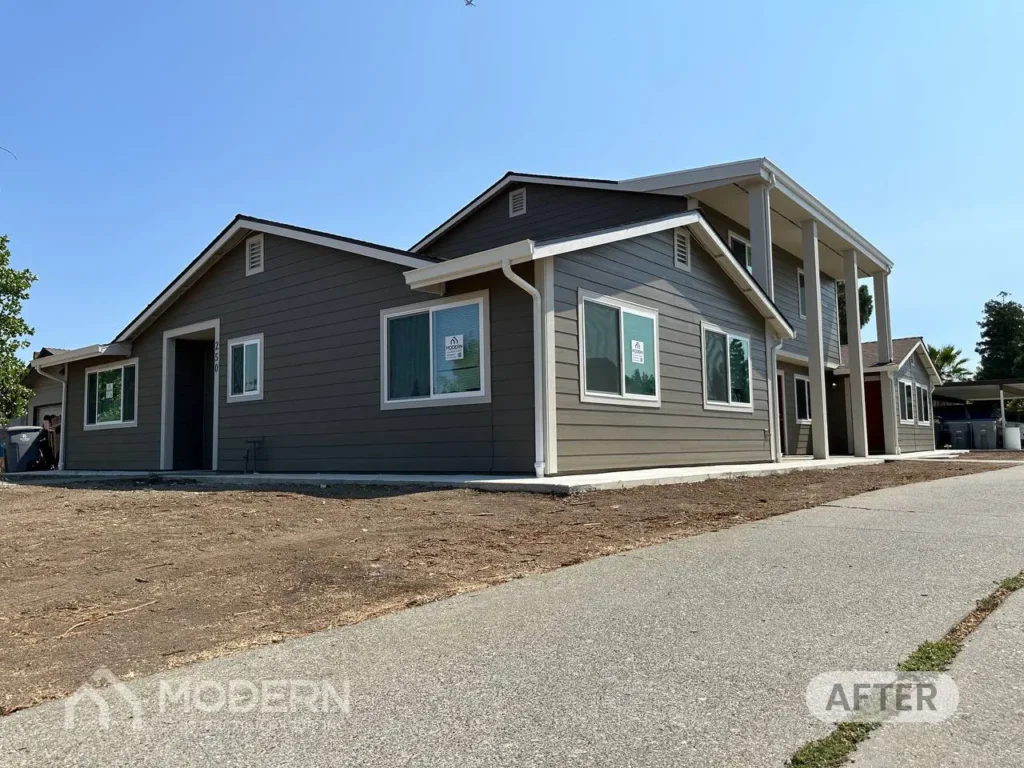
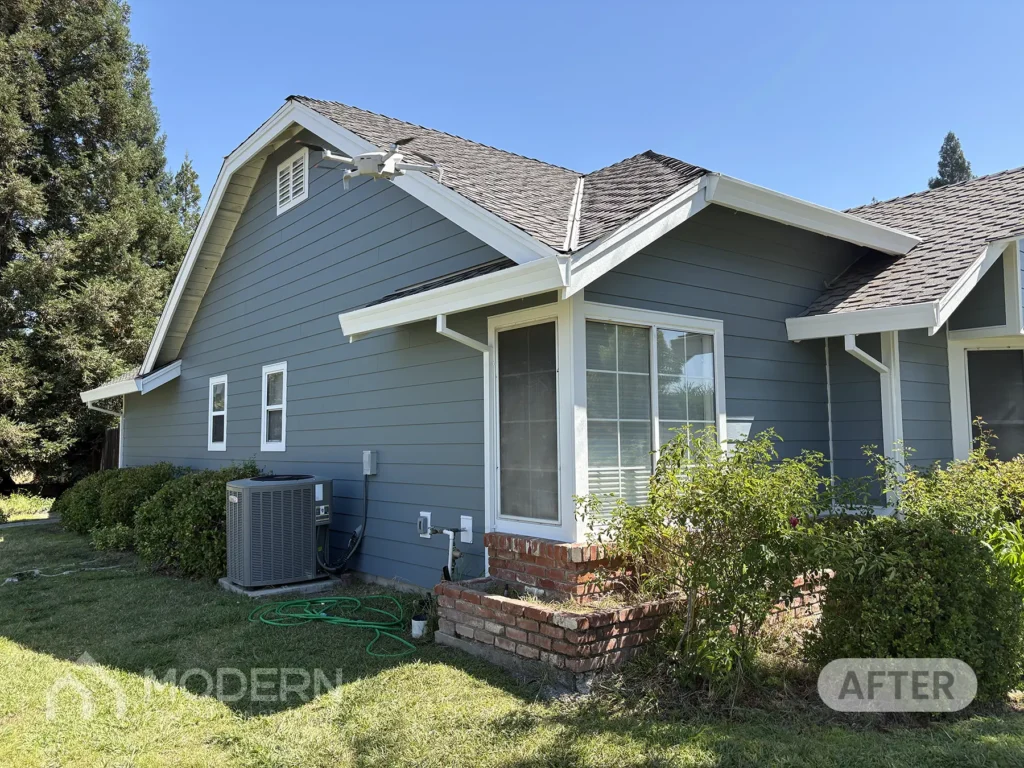
- True black vs. soft black, charcoal, and dark gray. Charcoal and slate undertones read dark without the flatness of true black. In our region, the darkest James Hardie ColorPlus color available is Iron Gray, a deep charcoal that most homeowners read as “black” on a full elevation.
Profile matters too. Lap, panel, shingle, and board-and-batten siding each catch light differently, and a dark color exaggerates that difference.
Why Homeowners Choose a Black House Exterior
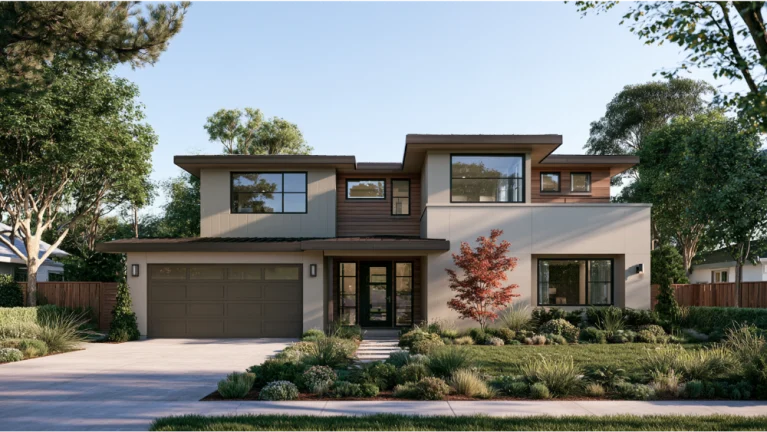
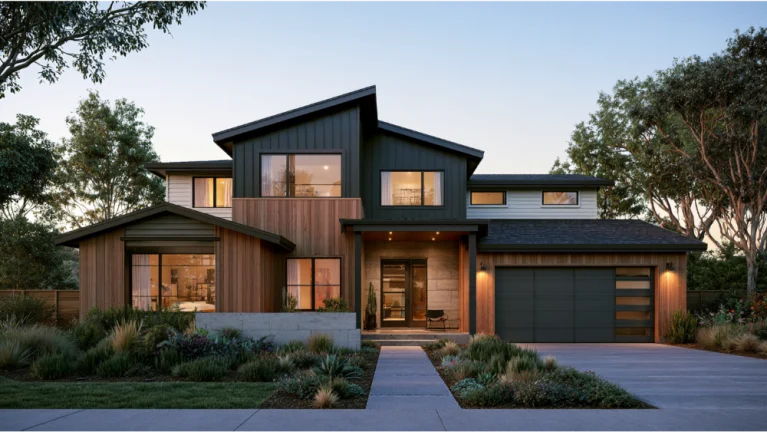
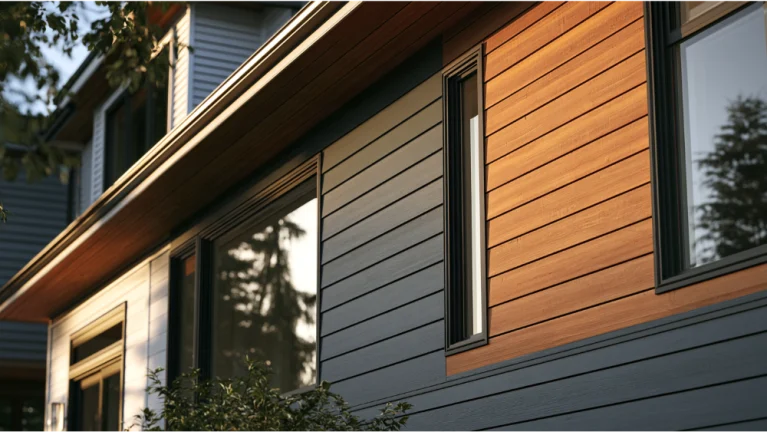
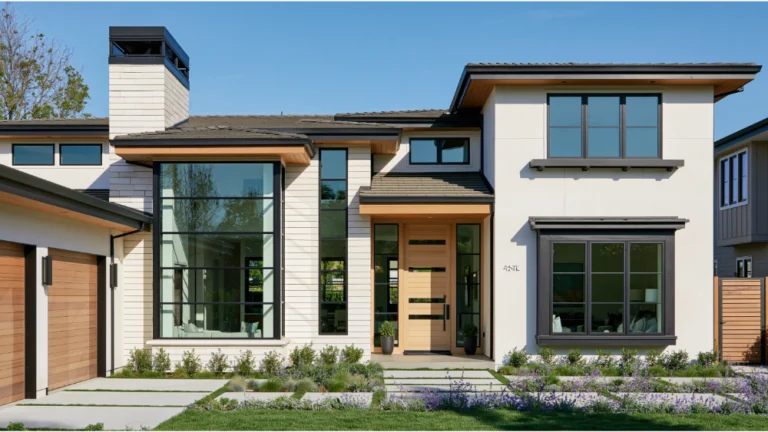
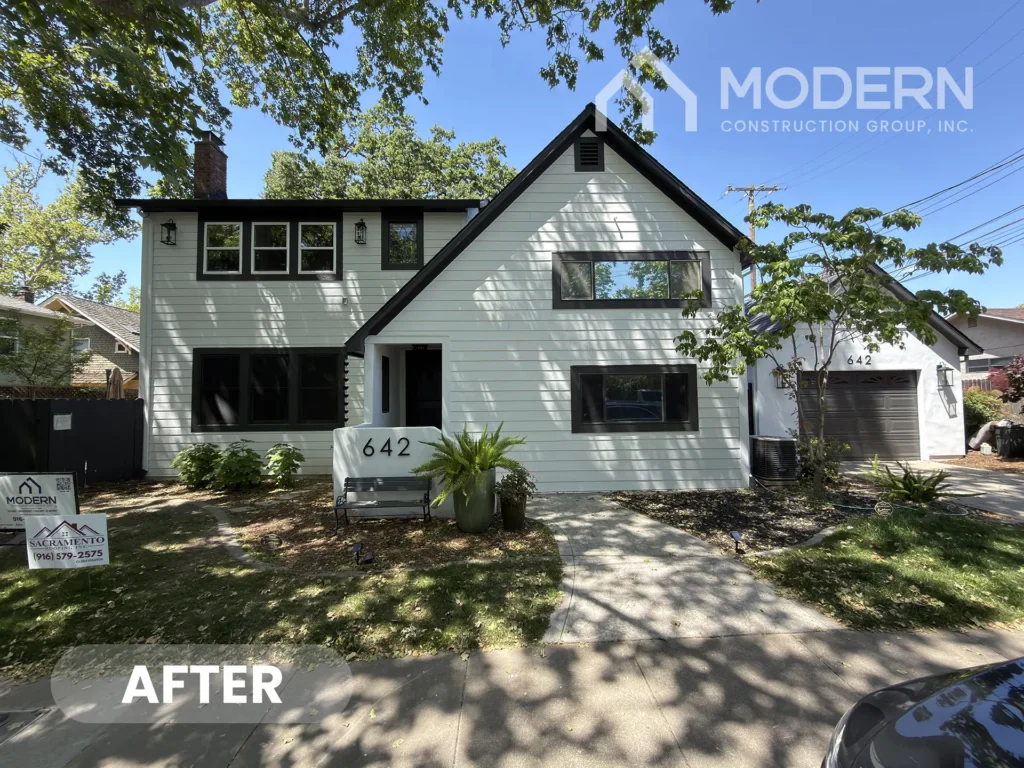
Black recedes visually. Rooflines, gables, and window shapes read more clearly against it, which is why strong architecture gains curb appeal in a dark color. Wood, stone, and copper look richer by contrast. A monochromatic dark exterior, where siding and trim share one tone, has a sculptural appeal lighter palettes can’t match.
Does Black Siding Make Your House Hotter?
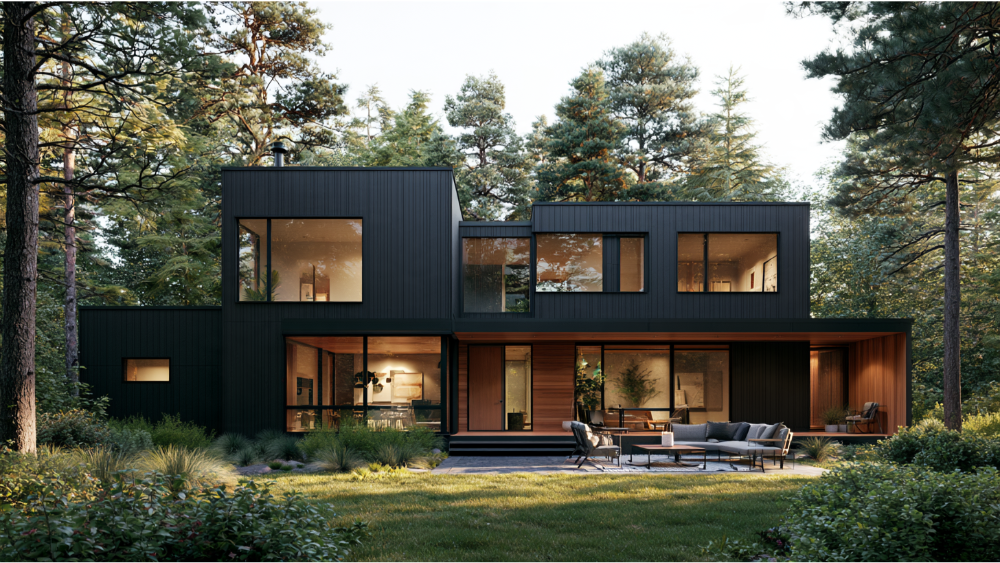
The siding surface gets hotter in direct sun. That part is physics. What happens inside depends on insulation, air sealing, the wall assembly, orientation, shading, and HVAC performance.
Research from Lawrence Berkeley National Laboratory on cool walls shows that raising a wall’s solar reflectance lowers its sun-exposed surface temperature and reduces daytime heat flow indoors. LBNL’s peer-reviewed modeling across 15 U.S. climate zones found annual HVAC cost savings of 1.8% to 8.3% in warm climates. That’s context on reflectance, not a prediction for your home.
In hot, high-sun regions, a deep charcoal like Iron Gray often performs and ages better than a true black while still delivering the dark look homeowners are after.
Does Black Siding Fade?
Every exterior color shifts under UV exposure, and dark pigments show it sooner. The variable you control is how the color was applied. James Hardie’s ColorPlus® Technology is applied and cured in a controlled factory environment and engineered to resist fading, peeling, and chipping. For dark exteriors, Iron Gray is the darkest ColorPlus option offered in our area.
If you want a true black or another custom dark color that isn’t in the James Hardie ColorPlus palette for our region, we’re not limited to factory colors. Modern Construction Group installs James Hardie primed siding and trim and then professionally paints the entire exterior on site using Sherwin-Williams SuperPaint or Duration, depending on the project. That gives you the James Hardie substrate with any color you want. Either way, confirm the exact product, color, and written finish warranty terms before you commit.
Which Siding Material Holds Up Best in Black?
| Material | Behavior in a dark color | Key consideration |
|---|---|---|
| Fiber cement siding | Dimensionally stable, holds a factory ColorPlus finish or on-site paint | Our recommendation for dark exteriors |
| Vinyl siding | Lower grades can warp from absorbed heat | Premium grades use heat-reflective pigment |
| Metal | Durable and fade-resistant | Denting and panel look vary by profile |
Fiber cement siding is the gold standard here. It stays dimensionally stable, handles weather and moisture, and sits on a noncombustible substrate. James Hardie fiber cement is cited to ASTM E136 for noncombustibility and ASTM E84 for surface-burning characteristics, which means something real in wildfire-prone and WUI areas. Color has nothing to do with fire performance. The substrate and the full wall assembly do. A 30-year material warranty is available.
Black Vinyl Siding vs. Fiber Cement
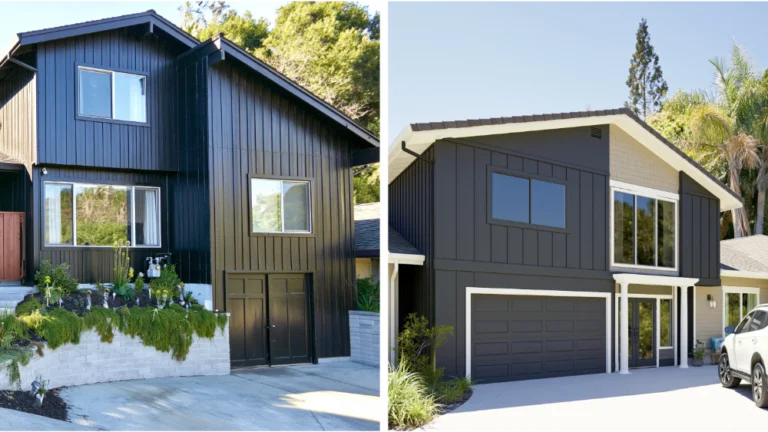
Black vinyl siding is where dark colors get complicated. Vinyl siding absorbs heat and can distort if the grade isn’t engineered for it, so the specific product matters more than the category. Fiber cement sidesteps the question: it doesn’t soften, and the color is either cured onto the board at the factory or applied on site with a premium Sherwin-Williams exterior coating. For instance, a dark board-and-batten elevation in fiber cement keeps crisp shadow lines and durability that thinner siding struggles to hold.
Black Siding and Architectural Styles
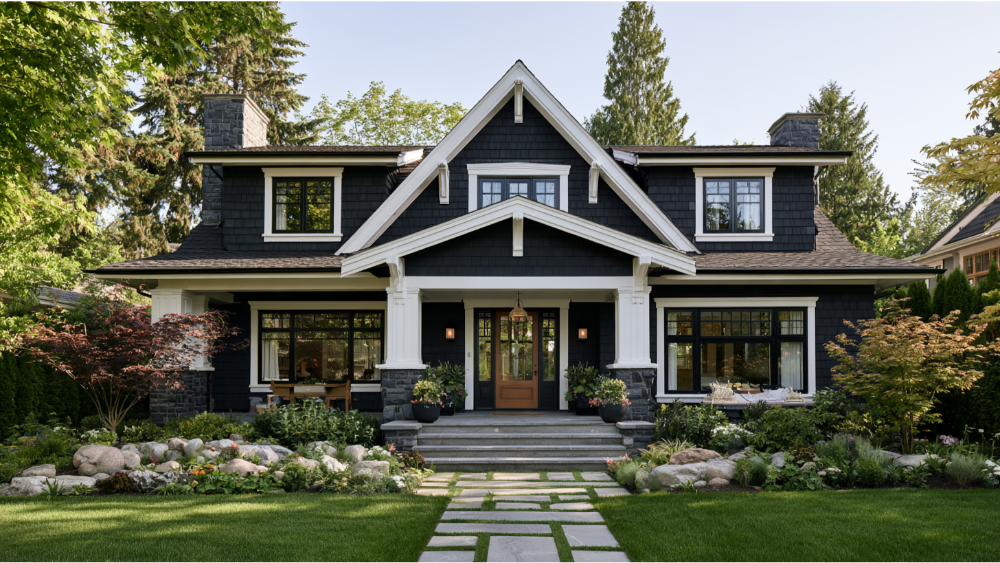
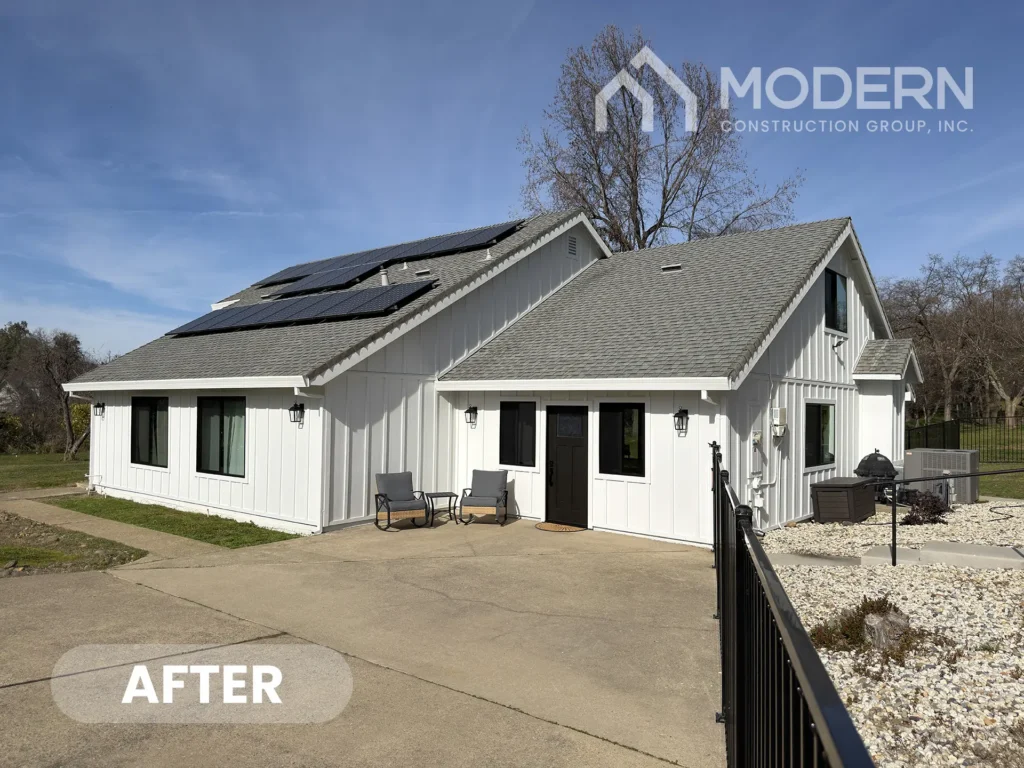
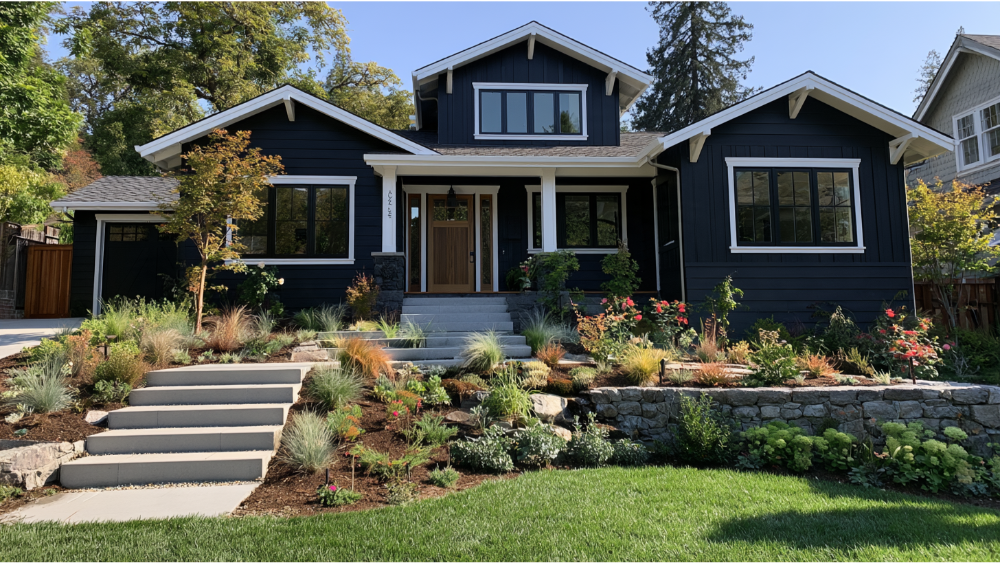
- Modern farmhouse: dark board-and-batten with white or matching trim.
- Ranch: horizontal lap siding reads as a long, low pavilion.
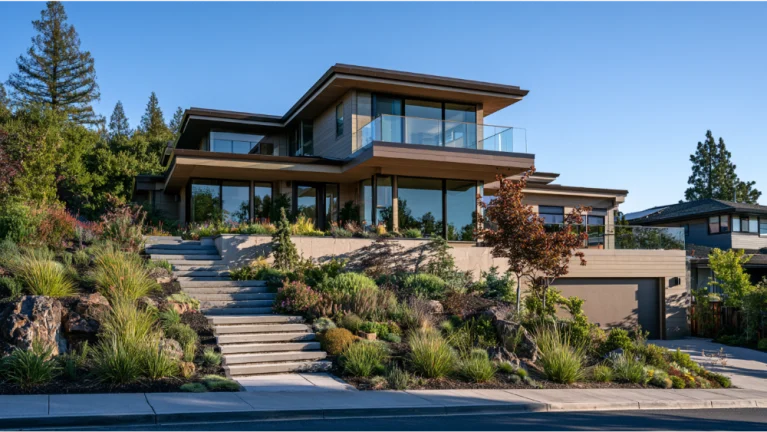
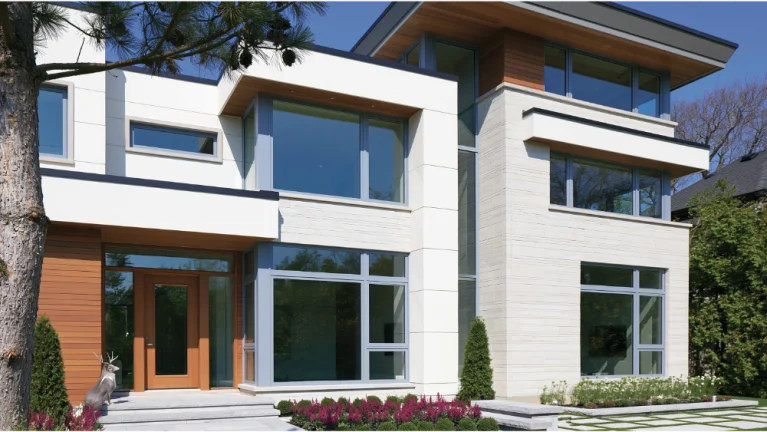
- Contemporary: all-black siding with minimal trim, achieved with primed Hardie products painted on site.
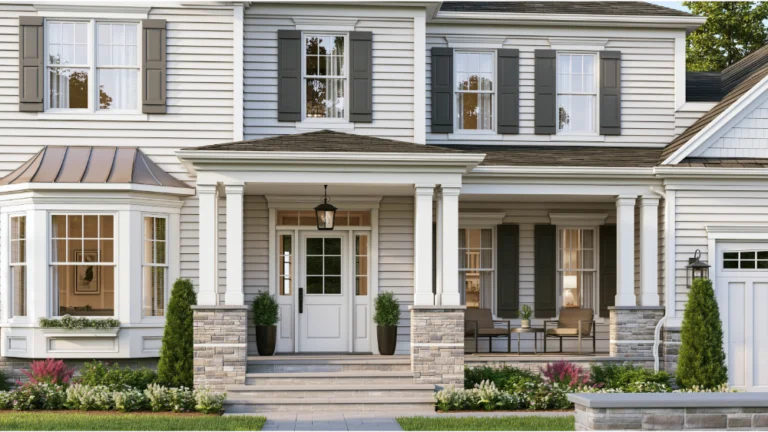
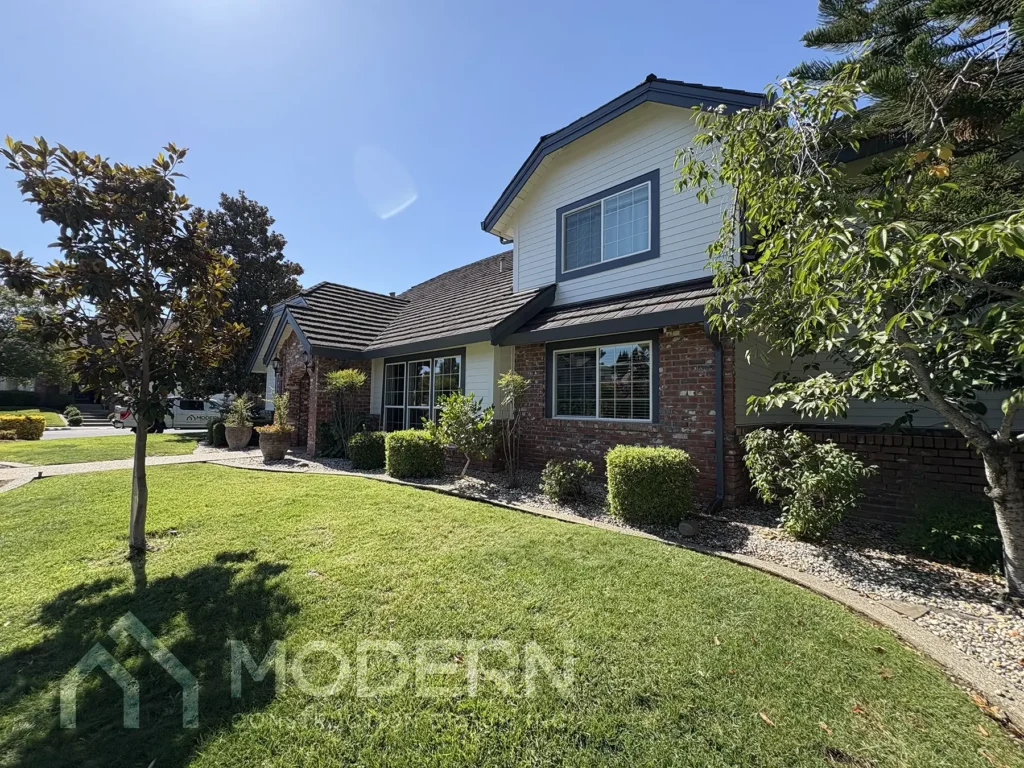
- Traditional: Iron Gray with crisp white trim is more livable than true black.
Warm wood accents soften the design, and stone adds depth. Decide early whether the dark color covers the full exterior or one elevation.
Why Expert Installation Matters More With Dark Siding
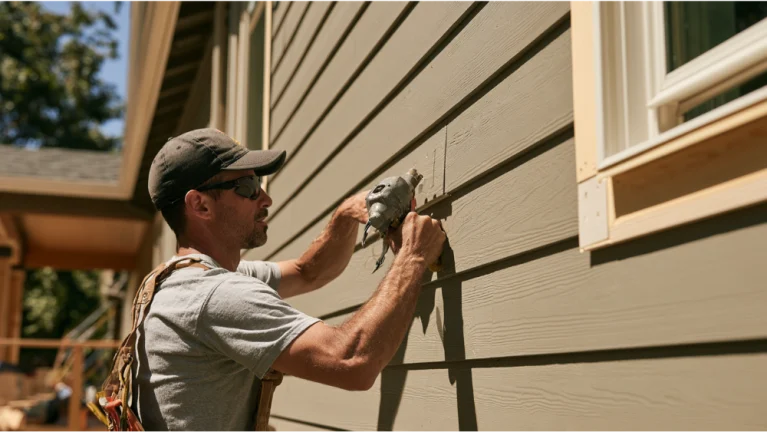
A dark exterior hides nothing. Dark colors show imperfections in both the wall and the installation far more than lighter colors do, and the effect compounds across longer wall spans where the eye can follow a single line for 30 or 40 feet. Any wave in the framing or sheathing, any course that drifts out of parallel, any inconsistent gap or chipped edge will read from the street. That makes proper shimming, dead-straight lines, consistent reveals, and overall craftsmanship non-negotiable on a dark house.
Behind the surface, flashing, joint treatment, fastening, and ventilation still have to manage water correctly, and manufacturer-compliant installation is what protects the material warranty.
It’s also worth knowing that darker siding shows normal scuffs and marks more noticeably. Trash cans, bicycles, ladders, and everyday use can leave surface marks on a dark wall that would disappear on a light one. Most of it cleans off, and keeping touch-up material on hand is a smart move.
We’re a James Hardie Alliance Select Contractor and an Anlin Authorized Dealer, family-owned, with Gary Chernyetsky personally overseeing project quality. California General Building License #1092104, licensed, bonded, and insured. We’re committed to two separate coverages: James Hardie’s 30-year material warranty available on the product, and our 15-year workmanship warranty on the installation.
Upkeep is simple. James Hardie recommends gentle cleaning with a garden hose and soft brush once or twice a year, more often in dusty conditions since residue shows sooner on dark siding. Pressure washing is not recommended.
Frequently Asked Questions
Is black vinyl siding a good idea?
It can work in a Does black siding cost more?premium grade engineered with heat-reflective pigment technology. Lower-grade vinyl siding can warp from absorbed heat. We install fiber cement because it stays dimensionally stable in dark colors.
Does black siding cost more?
Pricing depends on the material, profile, finish, and the condition of the wall behind the siding. Factory-finished dark colors may be made to order, and a custom color applied through our on-site painting process is priced differently than a standard ColorPlus order. A free estimate is the only accurate way to know.
What siding color is popular in 2026?
Dark neutrals lead. Iron Gray is James Hardie’s 2026 Color of the Year, and it’s also the darkest ColorPlus® Technology color available in our area, which makes it the go-to choice for homeowners who want a near-black exterior with a factory finish.
Can you get James Hardie siding in a true black?
Not as a factory ColorPlus color in our region. The darkest ColorPlus option available to us is Iron Gray. If you want a true black or another custom dark color, we install James Hardie primed siding and trim and professionally paint the exterior on site with Sherwin-Williams SuperPaint or Duration, so you’re not limited to the factory palette. Either way, view samples in morning, midday, shade, and evening light before you commit, and check HOA rules first. No cart of chips shows how a dark color reads across a full wall.
Get a Free Estimate for Your Black Siding Project
A black house exterior is a strong decision when it’s treated as a complete siding system rather than a paint chip. Get Your Free Estimate Today, or call (916) 699-7070 to talk through materials, ColorPlus and custom color options, and design details for your home. Financing is available.