Key Takeaway
Engineered wood siding is a manufactured cladding made from wood fibers or strands bonded with resin, pressed under heat, and factory primed, typically lasting 20 to 30 years with proper care. Understanding how engineered wood siding is made and how it performs reveals a key trade-off: it resists rot and impact well, but cut edges must be sealed and finish repainted every 7 to 15 years. In wildfire-prone Northern California, its combustibility makes fiber cement a stronger alternative.
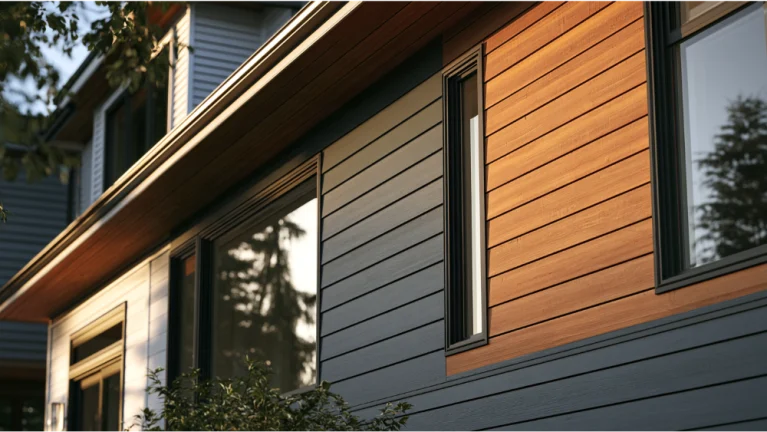
Engineered wood siding is a manufactured wood-based cladding made from wood fibers, strands, or veneers bonded with resins, then pressed and finished into lap or panel siding. Because it stays wood-based at its core, its real-world performance depends heavily on moisture control, finish maintenance, and installation quality. If you’re comparing siding options for a long-term exterior decision, this guide explains what the material actually is, how it holds up, and what Northern California homeowners in particular need to weigh before committing.
Quick Verdict: How Engineered Wood Siding Performs
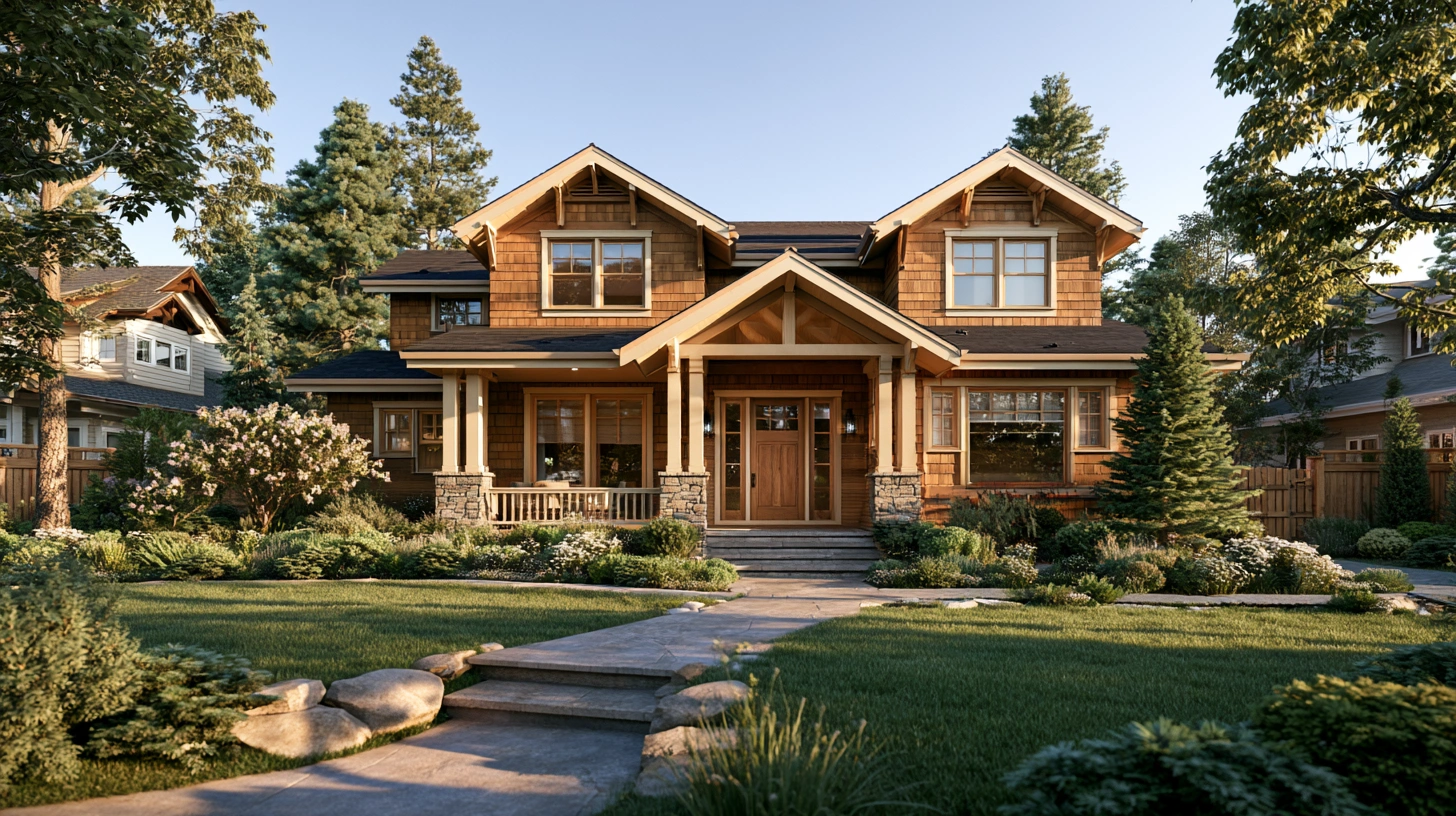
Engineered wood siding typically lasts 20 to 30 years with proper care. It’s lighter than real wood, easier to install, and comes in a wide selection of colors, styles, and wood-grain textures. It also carries treatments that make it more rot resistant and less prone to insect damage, and its cost is lower than solid wood lumber. Compared with untreated wood, the factory resins and additives give the boards better dimensional stability, which is part of why so many homeowners consider it.
- Best for: a wood-like appearance, solid impact resistance, factory-made uniformity, and a lighter, faster install.
- Watch out for: water intrusion at cut edges, ongoing finish maintenance, and fire limitations in wildfire-prone areas.
One local caveat: if your house sits in a WUI (Wildland-Urban Interface) area, you’ll want to scrutinize the fire performance of any wood-based product carefully.
What “Engineered Exterior Siding” Actually Means
“Engineered wood exterior siding” is an umbrella term, not a single recipe. It covers several distinct product families of engineered wood products, and these siding types don’t all behave the same. Veneer-based structural engineered siding is governed by ANSI/APA PRP 210. Hardboard and fiberboard-style engineered wood siding falls under ANSI A135.6, which evolved from the older hardboard siding standard. There are also broader wood-composite exterior siding products in the mix, and some resemble plywood in their layered veneer construction.
Both major standards define familiar forms: lap siding planks are typically 12 inches or less in width, while panels start at a 4-foot minimum. The category matters because it shapes how a product performs and whether it will meet local code. Two products both called “engineered wood” can behave very differently.
Engineered Wood Siding: How It’s Made and How It Performs at the Factory
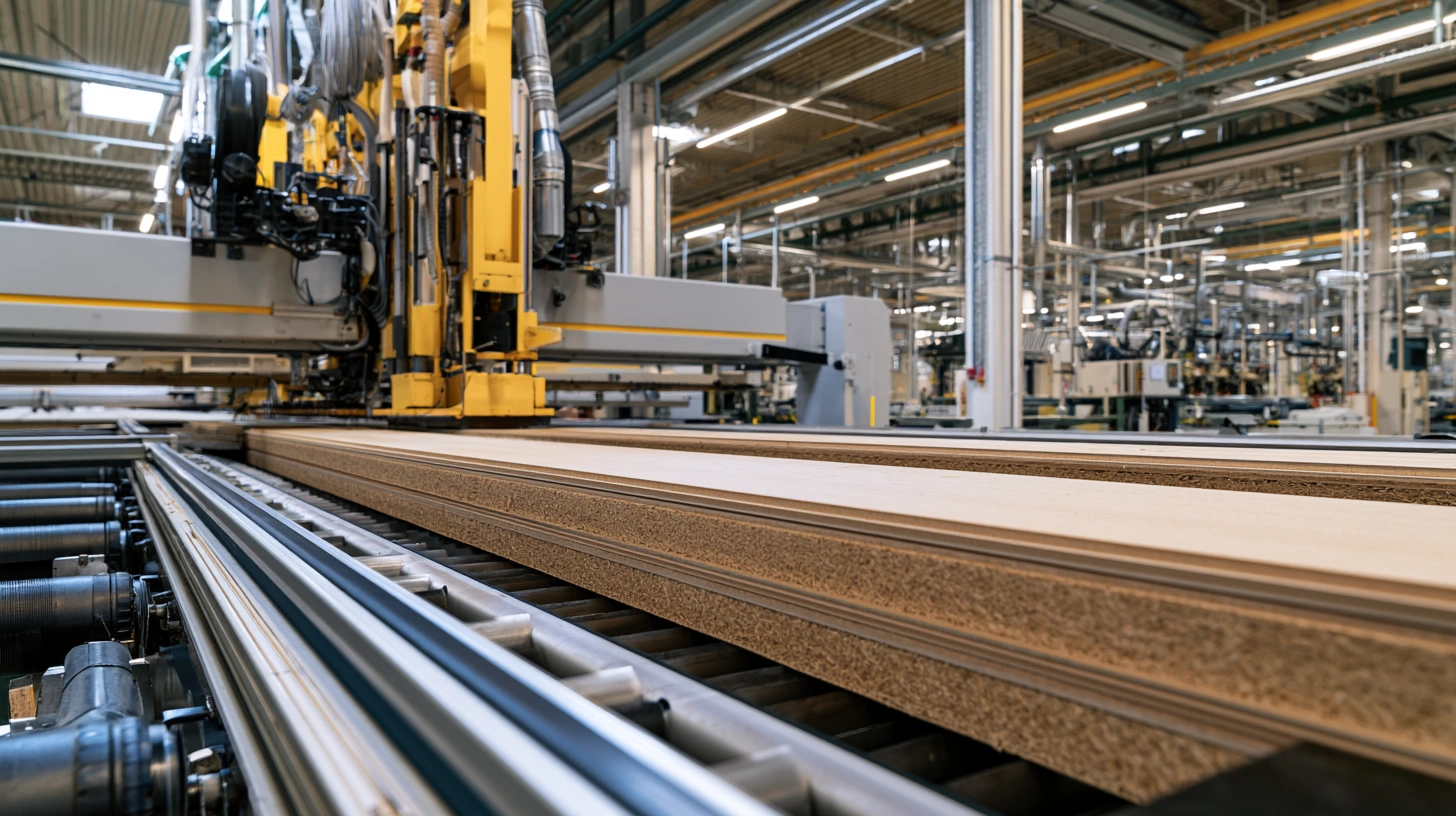
The installation process is more precise than most homeowners expect, and the material itself is mostly wood. Conventional wood-based composites are often 94% or more wood by mass, with only a few percent resin and additives.
- Wood elements are prepared. Fibers, wood strands, flakes, or veneers are cut from sustainably harvested trees.
- Resins and additives are blended in. Adhesives bond the wood together. Wax (usually 0.5% to 1%) slows short-term liquid water pickup, and a zinc borate treatment is added to resist termites and fungal growth.
- High heat and pressure are applied. The blend is pressed into dense, uniform boards or panels.
- The surface is profiled and embossed. A wood-grain texture is pressed into the face for a natural look, and the finished boards can be produced in several styles.
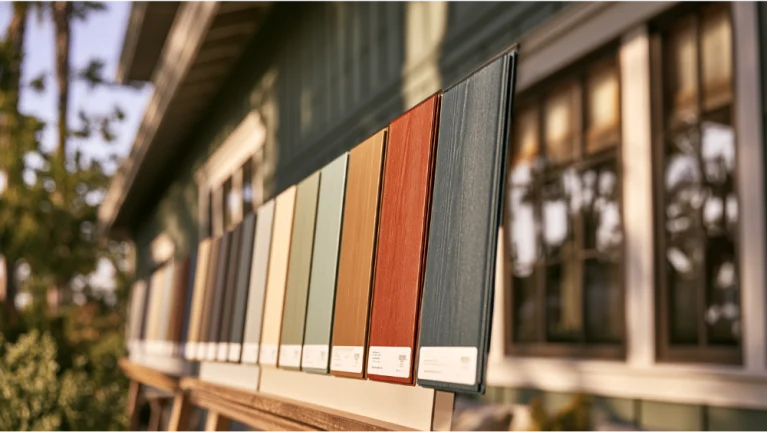
- The product is factory primed or prefinished. Most engineered wood siding ships pre primed for paint under a protective coating, and some arrives pre finished with a durable factory finish.
How Engineered Wood Siding Holds Up: Moisture, Impact, and Finish
Here’s the honest distinction that many guides skip: engineered wood siding is moisture-resistant, not waterproof. The wax slows how fast liquid water soaks in, but it has almost no effect on vapor-driven movement. As humidity shifts, the material still absorbs and releases moisture. ANSI A135.6 allows up to 12% water absorption and 8% thickness swelling at the time of manufacture, which tells you moisture management is central to the long term performance of the siding.
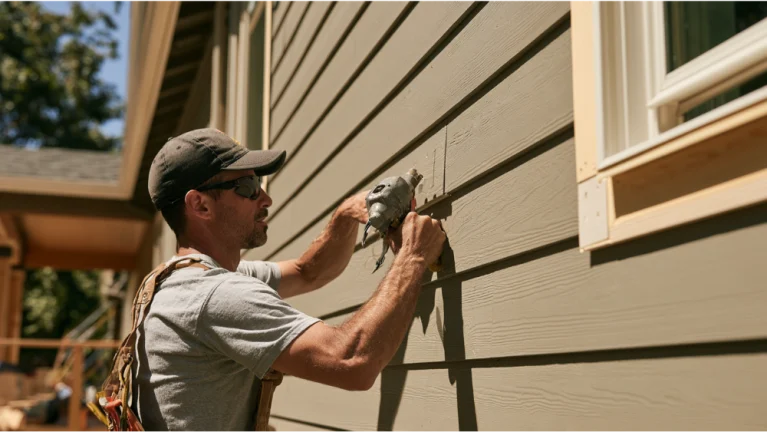
That’s why installation details decide the outcome. Cut edges must be sealed right away to keep water out, and the manufacturer’s clearance guidance (commonly 6 inches from the ground) and flashing details are not optional. On the plus side, engineered siding resists impact better than vinyl and holds up against warping and cracks better than untreated wood, and it cuts with standard tools. Real wood siding left untreated tends to check, split, and rot at the boards’ ends far sooner, and unchecked water damage accelerates that failure.
Finish Upkeep: Less Maintenance Than Raw Wood, But Not Maintenance-Free
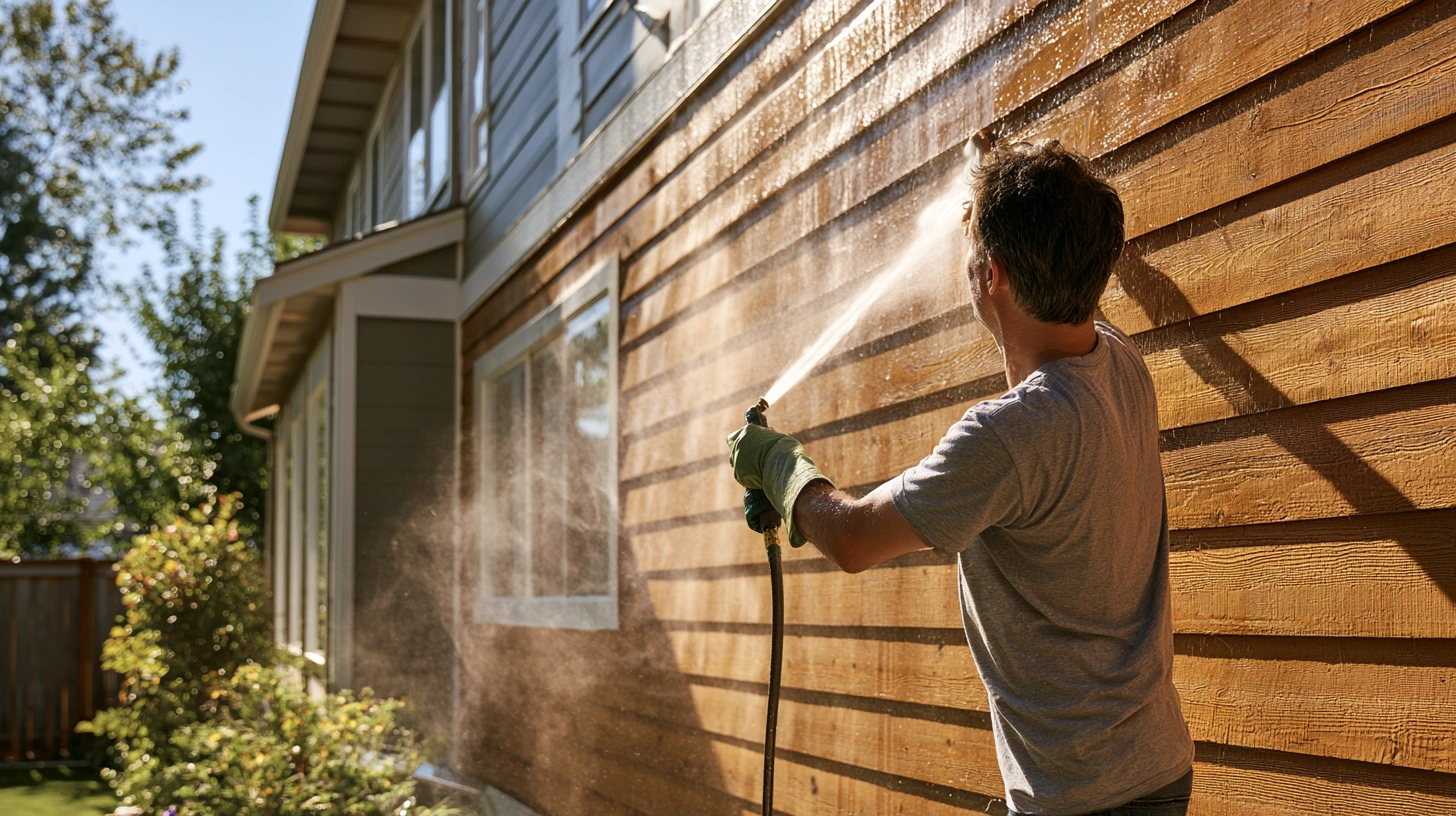
Finish upkeep is the trade-off, so engineered wood is not truly low maintenance, though it needs less maintenance than raw lumber. Plan on repainting every 7 to 15 years depending on exposure. A simple rhythm keeps it looking right and easy to maintain:
- Inspect the siding twice a year.
- Wash off dirt and mildew as it builds up.
- Reseal or paint any exposed or damaged edges promptly, and handle small touch ups before they spread.
Fire Resistance and WUI Areas in Northern California
For Northern California homeowners, fire performance is often the deciding factor. Three terms matter here. Combustible materials will burn. Ignition-resistant materials are treated or tested to slow ignition. Noncombustible materials, like fiber cement, don’t feed a fire the way wood-based building products can.
California’s Chapter 7A sets the rules for homes in fire-prone areas. Exterior walls must be noncombustible, ignition-resistant, or able to resist 10-minute flame exposure under SFM Standard 12-7A-1. The California Office of the State Fire Marshal (OSFM) publishes a WUI Listed Products Handbook, and the details matter: some engineered wood siding is only accepted in specific assemblies, such as installation over 5/8-inch Type X gypsum wallboard. Noncombustibility itself is judged by ASTM E136, which uses a vertical tube furnace at 750°C.
CAL FIRE recommends, at minimum, considering noncombustible siding for the bottom 2 feet from the ground if a full replacement isn’t possible, and UC ANR advises noncombustible or ignition-resistant siding when a house sits within 30 feet of a neighbor. Check your specific address against the CAL FIRE Fire Hazard Severity Zone maps before you choose. No siding makes a home fireproof, but the right material meaningfully changes your exposure.
Engineered Siding vs Fiber Cement: Comparing Your Exterior Siding Options
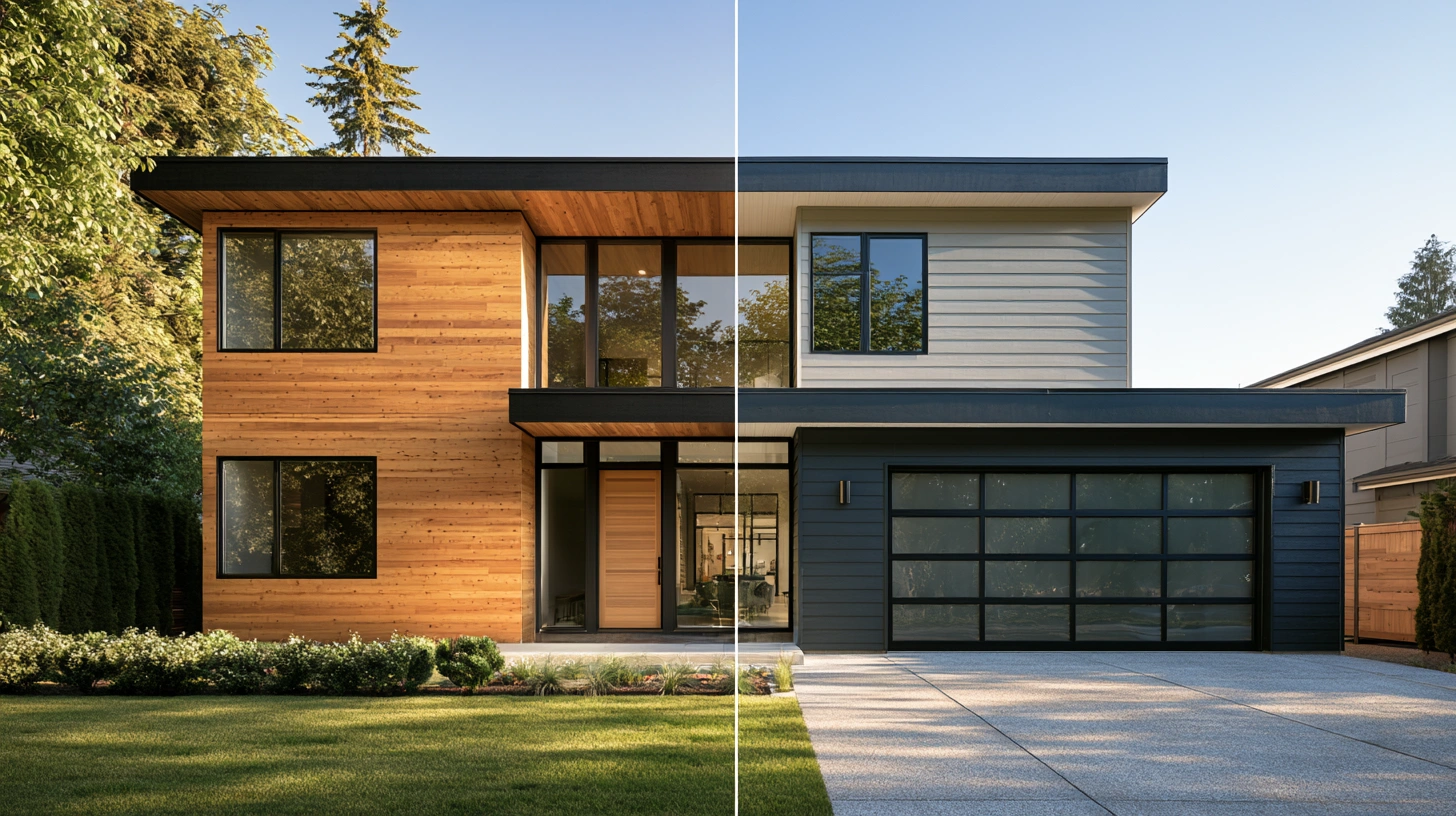
Both are strong siding options. They simply protect a home in different ways, and the siding vs siding decision usually comes down to fire performance and upkeep.
| Factor | Engineered Wood | Fiber Cement (James Hardie) |
|---|---|---|
| Composition | Mostly wood fibers or strands bonded with resin | Sand, Portland cement, cellulose fibers, water, additives |
| Moisture behavior | Absorbs and releases moisture; edges need sealing | Rot resistant and dimensionally stable |
| Fire performance | Combustible unless assembly-tested | Complies with ASTM E136 as noncombustible masonry-like cement board |
| Lifespan | 20 to 30 years | 30 to 50+ years |
| Maintenance | Repaint every 7 to 15 years; seal edges | Low maintenance; ColorPlus® finish resists fading |
| Warranty | Varies by manufacturer | 30-year non-prorated material warranty; ColorPlus® Technology carries a 15-year finish warranty |
Fiber cement wins on durability and fire performance, while engineered wood offers a slightly lighter, more cost effective install with lower labor costs on the crew side. For homeowners who want premium, long-term protection, James Hardie fiber cement siding is the gold standard for durability, beauty, and fire resistance. Engineered wood remains a capable choice when the assembly, finish, and installation are done right, and both compare favorably against natural wood siding on maintenance.
What to Ask Before You Choose Engineered Wood Siding
The right questions separate a product that performs from one that fails early, allowing homeowners to compare vinyl and fiber cement alongside wood on equal terms:
- Is the product labeled to ANSI A135.6 or ANSI/APA PRP 210?
- Is it OSFM-listed for my WUI condition, and what exact assembly does that listing require?
- What are the edge-sealing and painting requirements, and on what timeline?
- What happens if cut edges, penetrations, or lower courses get wet, and how quickly do cracks or swelling show up?
- Who is installing it, and are they trained for this specific siding project?
Certified, climate-specific installation is what protects your investment. The best material still underperforms in the wrong hands, and even durable boards fail early when edges go unsealed. Quality installation is worth just that much scrutiny.
Choosing the Right Siding for Your Northern California Home
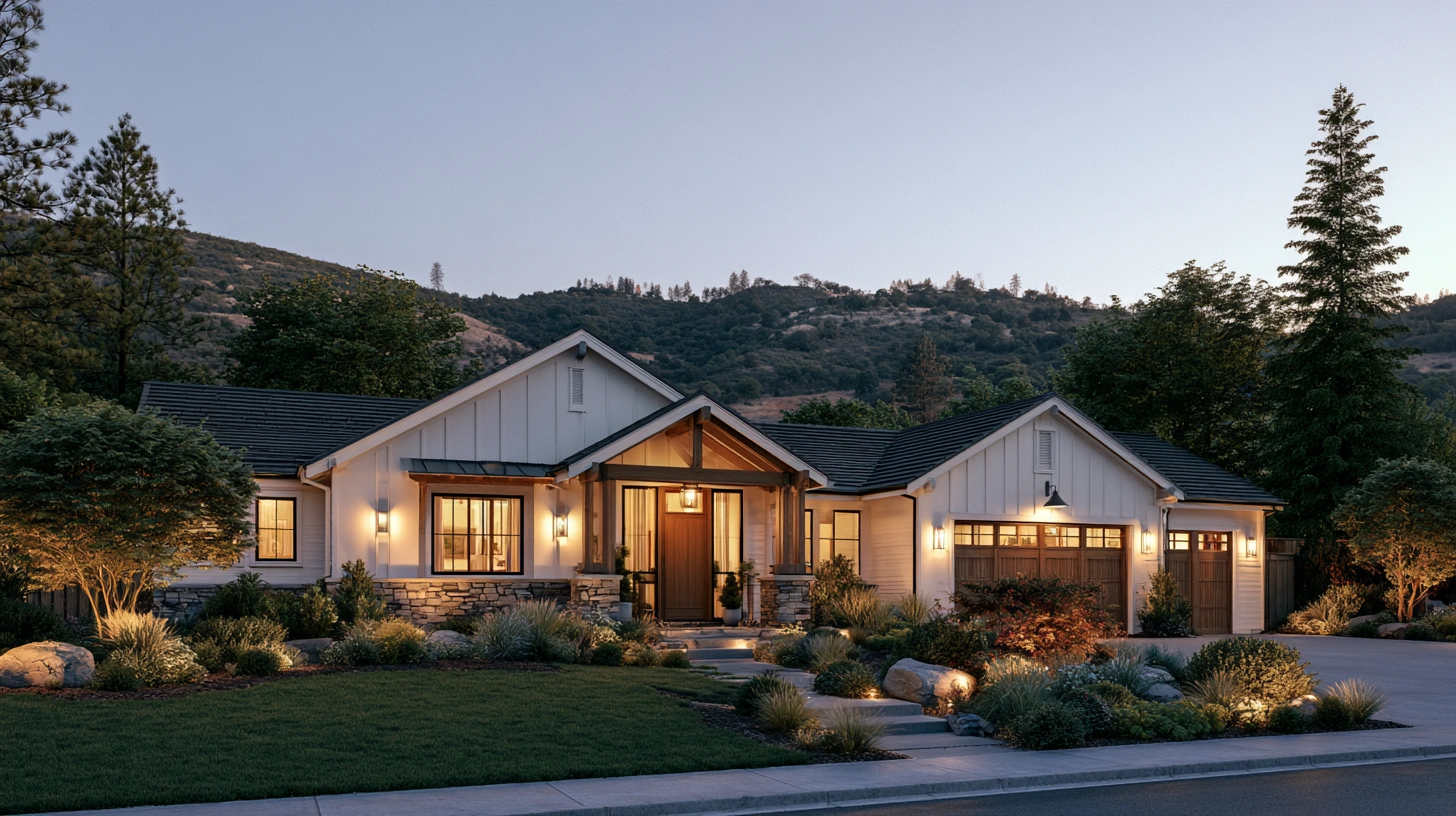
Northern California’s climate demands more thought than a generic national guide offers. If your home is in a WUI area, prioritize fire resistant, noncombustible-listed materials over any wood-based or vinyl product. If it faces valley heat and strong sun, prioritize a stable, fade-resistant finish that won’t chalk or need constant paint. If you’re in foothill or mountain-adjacent areas, weigh snow, freeze-thaw cycles, and wet-season drainage against the durability of each option.
And if your goal is a premium exterior you install once and trust for decades, James Hardie fiber cement siding installed by certified installers is the direction we steer most homeowners. The materials and installation techniques that work here aren’t universal, and that difference shows up years down the road.
Talk to a Certified Northern California Siding Specialist
Modern Construction Group is a family-owned, premium exterior remodeling company serving the Sacramento metro and Northern California. We’re licensed, bonded, and insured under California General Building License #1092104, a James Hardie Alliance Select Contractor and Anlin Authorized Dealer. We back our work with a 15-year workmanship warranty, with a 30-year material warranty available on James Hardie. Financing is available.
Get Your Free Estimate Today. Call (916) 699-7070.