Key Takeaway
Masonite siding is a discontinued hardboard product made from compressed wood fibers and resin, phased out by its manufacturer on March 6, 2001. It fails predictably when water reaches the wood-fiber substrate, causing swelling, delamination, and rot. Condition, not age, determines whether maintenance, localized repair, or full replacement is the right call. Fiber cement siding is the most durable replacement because it eliminates the wood-fiber substrate that makes hardboard vulnerable to moisture.
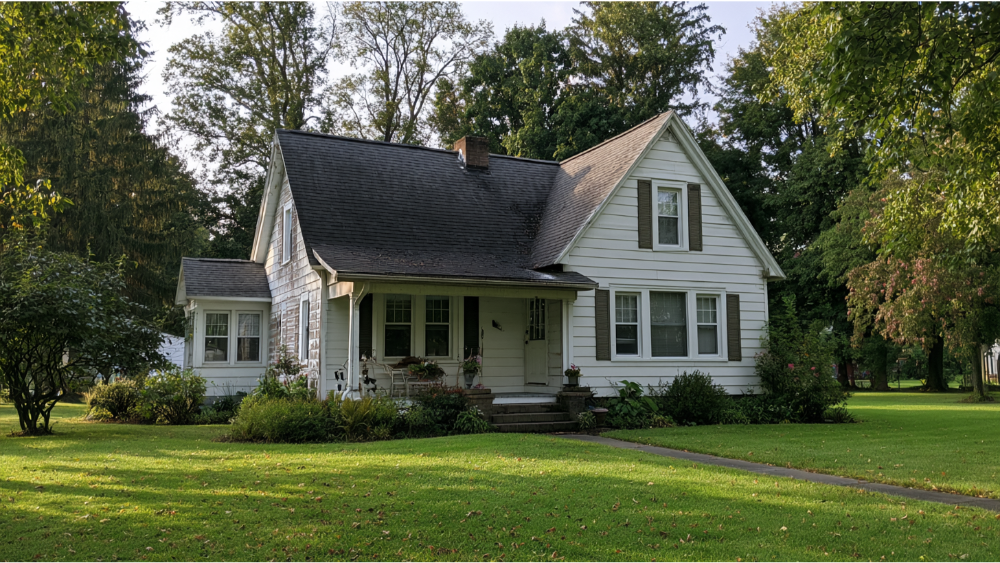
“Masonite siding” almost always refers to legacy hardboard siding made from compressed wood fibers bonded with resin. The original manufacturer announced the phaseout of all its hardboard siding products on March 6, 2001, so the product was discontinued, not banned. If you own or are buying a home with Masonite siding installed decades ago, condition decides your next move, not age. Below, we walk homeowners through how to identify this siding material, how to read the warning signs on your walls, and how to choose between maintenance, repairs, and full replacement.
What Is Masonite Siding Made Of?
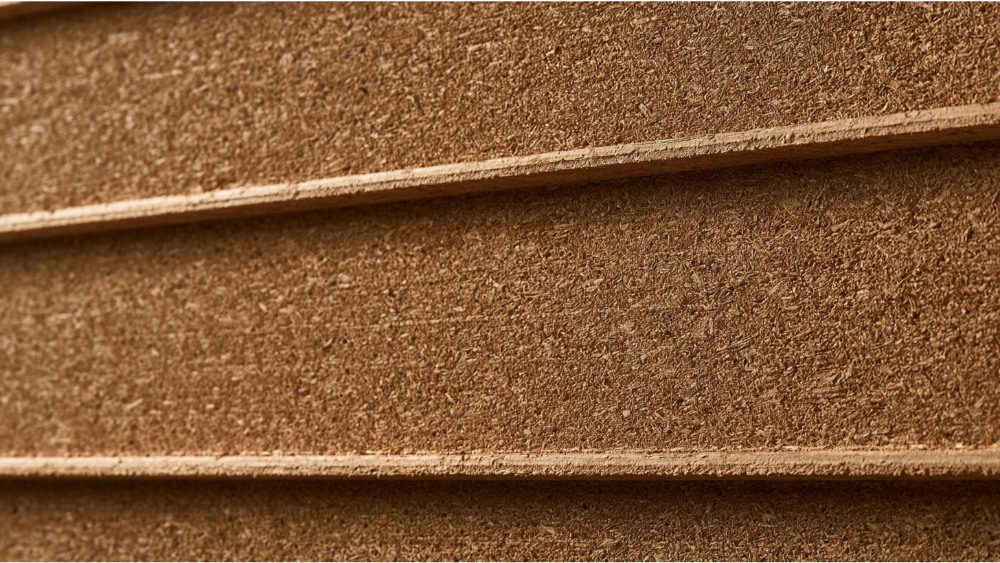
Masonite siding is a wood-fiber hardboard. Wood fibers are compressed under heat and pressure with resin binders into dense, uniform boards, then sold as lap siding or large vertical panels. The process traces back to William H. Mason in 1926, and the material became a common exterior choice from the 1930s through the 1990s. Most homes with Masonite siding installed today were built or re-sided between the 1970s and the 1990s.
Builders liked it for good reasons. It delivered a convincing wood-like appearance, held paint well, cost less to install than natural wood siding, and went up quickly. But unlike real wood, there is no grain to sand back into, and the substrate underneath that painted face is still wood fiber. Water is its weak point, and every one of the Masonite siding issues described below follows from that single fact.
Masonite Siding vs. Hardboard Siding vs. Engineered Wood Siding vs. Fiber Cement
Many homeowners use “Masonite” as shorthand for any brown wood-fiber board, which muddies the conversation. These are four distinct products.
| Material | What it is | Moisture behavior | Status today |
|---|---|---|---|
| Masonite-brand hardboard siding | Compressed wood fibers and resin from a specific manufacturer | Substrate swells when water reaches edges, cuts, or joints | Phased out in 2001 and no longer manufactured |
| Generic hardboard or pressboard siding | Similar wood-fiber products from other plants | Varies by formulation; same basic vulnerability | Largely replaced by newer products |
| Modern engineered wood siding | Wood-strand or fiber products covered by ANSI A135.6:2012(R2020) | Treated to resist moisture better than legacy hardboard | Currently manufactured |
| James Hardie siding (fiber cement) | Cement, sand, and cellulose fibers | Cement-based substrate resists water damage | Currently manufactured |
Two corrections matter. Not every wood-fiber board on an older home is Masonite-brand product, and plenty of lookalike hardboard siding came out of other plants. Today’s engineered wood siding is also not chemically identical to what went up in 1985.
Can You Still Buy Masonite Siding?
No. The original manufacturer phased out all hardboard siding products in 2001, and the Masonite company today catalogs interior and exterior doors, not siding. Similar products still exist inside the broader engineered wood siding category, but they are not the same boards.
That has a practical consequence for Masonite siding repairs. Legacy profiles, thicknesses, and surface textures are hard to match. If you need to swap out a handful of boards on a prominent wall, expect a visible difference, and factor that into the repair-versus-replace decision later on.
Was Masonite Siding Banned?
No federal ban exists. The brand discontinued production, which is a business decision, not a regulatory one. Homes with Masonite hardboard siding are legal to own, sell, and insure, and many installations are still performing.
What Happened With the Masonite Class-Action Lawsuit?
The principal hardboard settlement was finalized on January 15, 1998, covering U.S. property owners with Masonite hardboard siding installed between January 1, 1980 and January 15, 1998. According to SEC filings, claim deadlines expired January 18, 2005 and January 15, 2008. It is no longer a source of compensation for repairs, and settlement history alone does not diagnose your house.
How Can You Tell If Your Home Has Masonite Siding Installed?
Find a cut end, a damaged corner, or a broken edge and look at the cross-section. Then work through this checklist:
- A dense, uniform brown core with no visible wood grain layers and no gray cement look
- A smooth or lightly embossed face with a wood like appearance, often painted many times over
- Long lap siding boards or large panels of consistent thickness
- Stamps, grade marks, or manufacturer text on the back of a removed board
- A build or re-side date between the 1970s and the 1990s
Appearance and age cannot prove who made it. A contractor or home inspector should confirm the siding material, and any unidentified older cladding should be tested before anyone cuts, sands, or tears into it.
Why Is Masonite Siding So Prone to Moisture Damage?
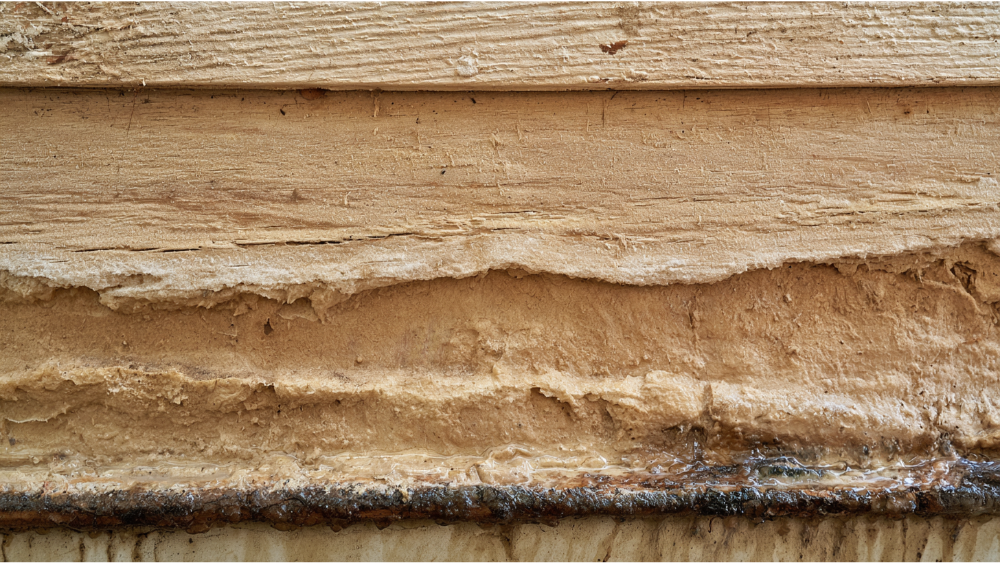
Masonite siding fails in a predictable sequence:
- A coating, cut edge, butt joint, nail head, or piece of flashing becomes vulnerable.
- Water reaches the wood-fiber substrate behind or beneath the paint film.
- The fibers absorb that water and swell.
- Swelling opens small cracks in the coating or welts the bottom edge, widening the path for moisture intrusion.
- Repeated wetting produces softness, delamination, and eventually rot.
USDA Forest Products Laboratory research exposed 13 hardboard siding products, representing all U.S. plants operating in 1996 and 1997, for 155 months. The dominant failure modes were drip-edge paint cracking and edge welting, and performance varied widely between products. Temperature swings and freeze-thaw cycling add cracking and splitting on top of that. So “the Masonite siding is old” is the wrong diagnosis. Water pathways are, and the moisture damage they cause is cumulative.
Signs Your Masonite Lap Siding Is Failing
Most homeowners can do this walkthrough themselves. Walk the perimeter slowly and press on suspect boards with your thumb.
| Sign | Likely meaning | Next step |
|---|---|---|
| Chalking or fading paint only | Coating wear, substrate may be sound | Check board firmness before repainting |
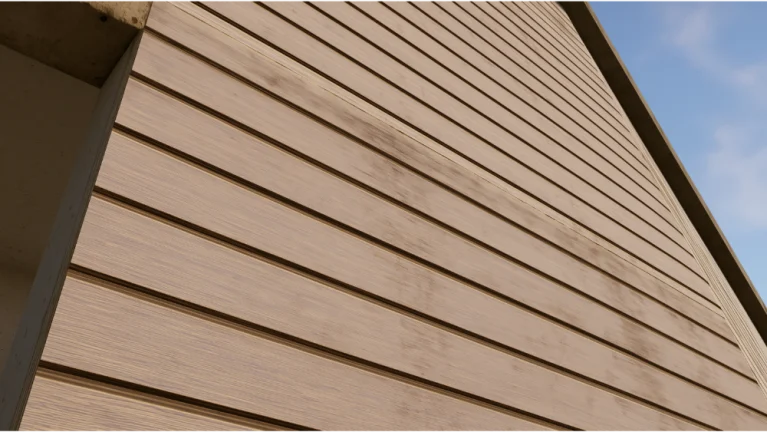
| Bubbling paint or peeling paint | Coating failing over a damp substrate | Find the moisture source before recoating |
| Swollen or thickened lower edge | Moisture absorption at the drip edge | Trace the water source, assess the board |
| Soft spots, sponginess, or a fuzzy face | Substrate deterioration and possible rot | Replace and inspect what’s behind it |
| Layers separating (delamination) | Board has failed structurally | Replacement assessment |
| Water stains that return after repainting | Active moisture pathway | Inspect flashing and wall assembly |
| Open joints or failed sealant | Direct water entry | Correct before any coating work |
| Mold or musty interior odor | Possible concealed water damage | Professional moisture inspection |
| Multiple walls affected | Systemic issue, not isolated damage | Whole house siding evaluation |
Inspect at least twice a year and after major storms. Small repairs cost far less than letting water reach the sheathing.
Can Masonite Siding Be Repaired or Repainted?
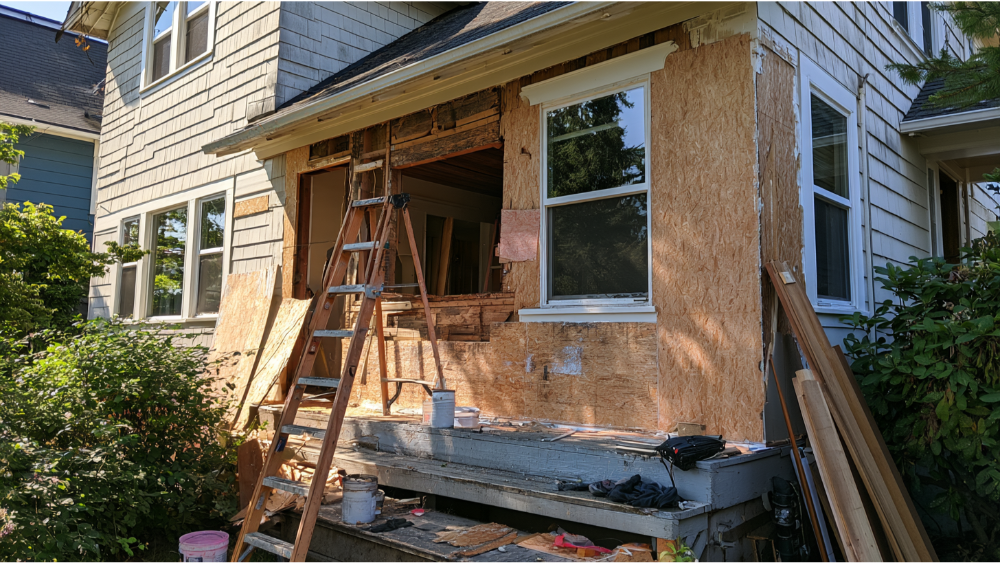
Yes, when the substrate is firm, flat, and dry. Quality exterior paint and sealant genuinely protect sound hardboard siding. What they cannot do is restore fibers that have already swollen, softened, or come apart in layers. Painting over a spongy Masonite siding board hides the symptom and lets the moisture damage continue underneath.
Localized Masonite siding repairs can work if you correct the water source first and can source a compatible profile, though some appearance mismatch is likely. Homeowners who patch one wall are often left wondering why the new boards never quite disappear into the old. You’ll see pages online claiming you should replace once 15 to 20 percent of the siding is damaged, or that Masonite siding lasts 20 to 30 years. Those are field rules of thumb, not standards, and the USDA data showing wide product-to-product variation is exactly why no universal lifespan number holds up. Condition beats percentages.
Maintenance That Extends the Life of Masonite Siding
- Repaint on roughly a five to six year cycle with a high-quality exterior paint
- Seal cut edges, butt joints, and nail heads
- Keep gutters and downspouts working, maintaining proper drainage away from the walls
- Maintain clearance from soil, paving, decks, and roof shingles
- Adjust sprinklers so they never hit the siding
- Stay ahead of caulking at window and door perimeters before gaps open
This is regular maintenance, and the cost of it never stops. Anyone calling hardboard siding low maintenance is not being straight with you. Many homeowners decide that after a second or third round of spot repairs, the upkeep cycle itself is the reason to re-side.
When Should You Replace Masonite Siding?
Instead of chasing a damage percentage, we walk homeowners through three tiers.
- Maintain: boards are in good shape, firm and flat, joints are sealed, and there’s no recurring moisture entry.
- Localized repairs: a limited number of damaged boards, the water source is corrected, and a compatible profile is available.
- Full replacement assessment: widespread softness, swelling, or rot, delamination, several generations of spot repairs, paint that keeps failing in the same places, suspected structural damage to the sheathing, unmatchable profiles, or a goal of fire resistant cladding with less upkeep.
Rot and structural deterioration don’t reverse. Once several walls show moisture related issues, you’re managing a system problem, not a board problem.
What Happens During a Masonite Siding Replacement?
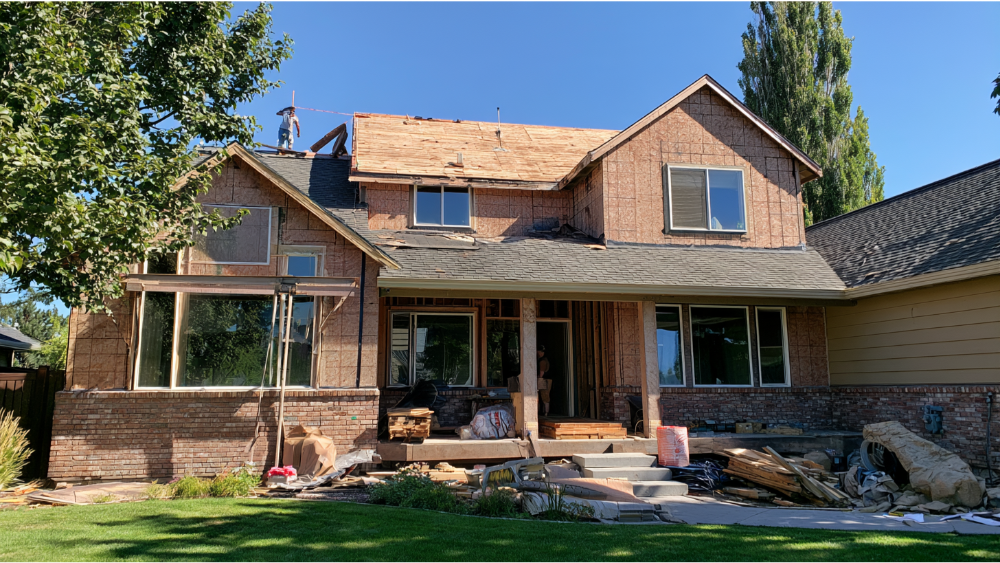
A proper Masonite siding replacement corrects how the wall handles water. Board-for-board swaps that ignore the assembly behind the cladding repeat the original failure.
- Confirm the existing material and any renovation-safety requirements.
- Remove the existing cladding according to the approved assembly.
- Inspect sheathing and framing for concealed damage.
- Repair water-damaged or rotted structure.
- Install or restore a continuous water-resistive barrier.
- Integrate flashing at windows, doors, roof-to-wall intersections, decks, and penetrations.
- Install new siding to manufacturer requirements.
- Complete a final workmanship inspection.
The 2024 IRC model provisions call for a weather-resistant exterior wall envelope with a continuous water-resistive barrier, proper drainage for water that gets past the cladding, and flashing at openings. True weather resistance comes from the whole assembly, not the boards alone. Local adoption and amendments vary, so your jurisdiction’s adopted code governs.
Lead Paint and Asbestos: Safety Before Any Demolition
Hardboard siding is a wood-fiber product, but the EPA is clear that laboratory testing is the only way to confirm whether unidentified material contains asbestos. On pre-1978 housing, the EPA’s Renovation, Repair and Painting Rule generally requires certified firms and lead-safe work practices. The minor-repair exception covers no more than 20 square feet of exterior painted surface, and demolition of painted components is covered regardless of size. Homeowners should not sand or cut unidentified siding before testing, and state or local rules can be stricter.
Masonite Siding Replacement Options Compared
Once you’ve decided to replace your Masonite siding, the siding material you choose determines how the wall behaves for the next few decades.
Fiber Cement Siding
Fiber cement siding is made from cement, sand, and cellulose rather than wood fiber. It will not rot, it resists moisture damage, and the Insurance Institute for Business & Home Safety classifies fiber cement as noncombustible while classifying engineered wood as combustible. It is the stronger material of the group, and that durability is why we build around it.
Engineered Wood Siding, Vinyl Siding, and Steel
Modern engineered wood siding uses moisture treatments that legacy hardboard never had, though it stays on a maintenance schedule. Vinyl siding will not rot and resists mold and insects, but vinyl is a plastic cladding, and many homeowners find it reads differently on a home that had painted lap siding. Steel carries a Class A fire rating, does not absorb water, and will not rot.
Traditional Wood Siding
Beautiful, and it puts you right back on a maintenance-driven cycle. Without diligent sealing and repainting, traditional wood siding is prone to rot the same way hardboard is.
Why James Hardie Siding Is the Gold Standard Replacement
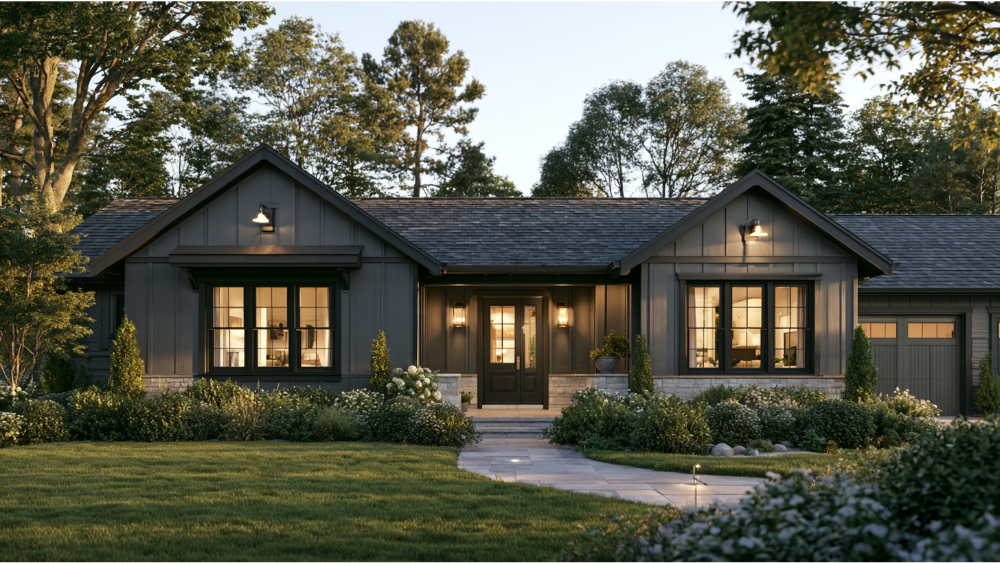
We install James Hardie siding because it removes the mechanism that failed legacy Masonite siding. Swap a wood-fiber substrate for a cement-based one and water no longer has fibers to swell or rot. James Hardie states its siding complies with ASTM E136 as noncombustible cladding, which matters in wildfire-exposed and WUI areas. FEMA lists fiber cement among the cladding choices that reduce wildfire vulnerability, though cladding is one part of a wall assembly and no material makes a home fireproof.
ColorPlus® Technology adds a factory-applied, cured finish engineered to resist fading, peeling, cracking, and chipping. A 30-year non-prorated, transferable limited substrate warranty is available on the material. For homeowners who have already paid for one round of Masonite siding repairs, that combination of a durable substrate and long term protection is usually the deciding factor, and it protects both the structure and your home value.
Why Certified Installation Matters More Than the Material Alone
Legacy Masonite siding issues usually started at details: unsealed cut edges, open joints, missing flashing, boards buried too close to grade. Those same details decide how fiber cement performs, and installation quality drives longevity as much as the material does. Manufacturer-approved installation techniques also protect the material warranty.
Modern Construction Group is one of the select few contractors certified by James Hardie as an Alliance Select Contractor. We’re family-owned, licensed, bonded, and insured under California General Building License #1092104, and we back our work with a 15-year workmanship warranty. Gary Chernyetsky, our owner and founder, stays personally involved in project oversight. We’ve chosen to master two disciplines rather than offer dozens.
Frequently Asked Questions
Can you still get Masonite siding?
No. The original brand phased out all hardboard siding products in 2001. Similar products exist in the broader engineered wood siding category, but matching legacy profiles for spot repairs is difficult.
Are Hardie board and Masonite siding the same thing?
No. Hardie board is fiber cement made from cement, sand, and cellulose. Masonite siding is compressed wood fibers and resin. Different substrates, and very different moisture and fire behavior.
Should I buy a house with Masonite siding?
Condition decides. Firm, flat, well-sealed boards with no recurring moisture entry can stay serviceable for years. Widespread swelling, softness, or rot means budgeting for replacement, so get a siding and wall-assembly inspection before closing.
What does Masonite siding replacement cost?
Cost depends on wall area, the condition of the sheathing behind the boards, and the extent of structural repairs needed once the old cladding comes off. We don’t quote from a photo. A free estimate after an on-site inspection is the only honest number, and financing is available.
What can I replace Masonite siding with?
Fiber cement, modern engineered wood siding, vinyl siding, steel, or traditional wood siding are all replacement options. We install James Hardie siding for its durable cement-based substrate, moisture performance, and noncombustible fire resistance.
Get a Straight Answer About Your Siding, Free Estimate
Before you assume the worst or repaint over a problem, have the walls behind your Masonite siding assessed by someone who knows what’s back there. We’ll tell you what we find. Get Your Free Estimate Today by calling (916) 699-7070. Financing is available, and we’re happy to walk you through the details.